Dissertation · BA (Hons) Digital Media Design: 3D Visualisation, University of Winchester
How AI is developing in the 3D Animation Industry and how this might impact my career as a 3D Visualisation/Animation Professional
Written in 2023; the field has moved since.
ABSTRACT
The use of artificial intelligence in the 3D animation and creative industry in general is revolutionising the way in which visual content is created. Utilising AI-powered tools in the creation of 3D animation and digital design improve the speed and efficiency of the 3D animation process, while also enhancing the quality and realism of the final output, providing sustainability of the entire production process. These practices are set to expand and modernise with even greater results for the future. However, the extent of its success, and the amount of anxiety it causes today, is immeasurable, due to, the enhanced familiarity of consumer with the technology, its advantages, and disadvantages. Through ethical and controlled utilisation, society will combat these factors and potentially accelerate the shift to the complete integration of AI into the creative industry in the future. 3D visualisation/animation and other creative professionals, should be aware of fast-rising technology and stay up to date with the latest AI skills and tools in order to remain competitive in the industry. The integration of AI into 3D animation workflows will require a new set of skills and knowledge, which professionals will need to acquire to remain relevant and succeed in their careers.
LIST OF FIGURES
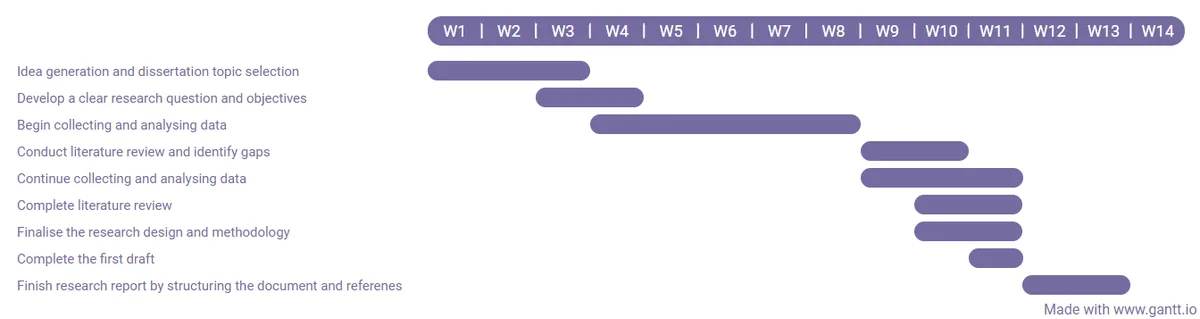
- Figure 1. Time management gantt chart for semester 1 research report
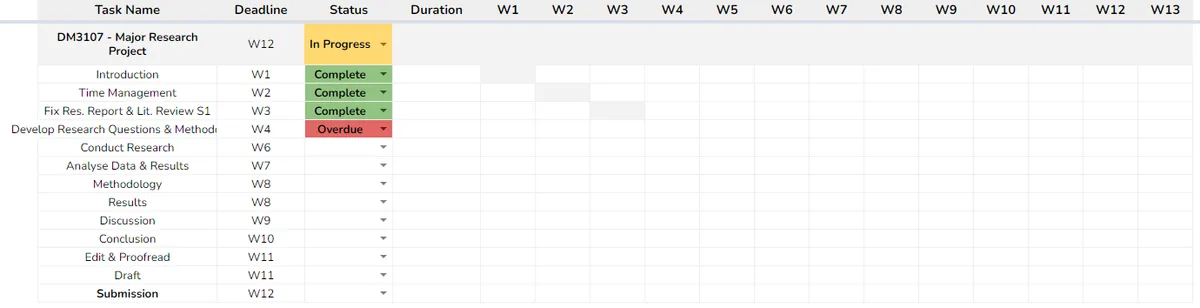
- Figure 2. Time management gantt chart for semester 2 final dissertation
- Figure 3. Survey question 1 results
- Figure 4. Survey question 2 results
- Figure 5. Survey question 3 results
- Figure 6. Survey question 4 results
- Figure 7. Survey question 5 results
- Figure 8. Survey question 6 results
- Figure 9. Survey question 7 results
- Figure 10. Survey question 8 results
- Figure 11. Survey question 9 results
- Figure 12. Survey question 10 results
- Figure 13. Survey question 11 results
- Figure 14. Survey question 12 results
ACKNOWLEDGEMENTS
I would like to express my sincere gratitude and thanks to Rhys Lockley, Marina Brkljac and Deborah Wilson for their consistent support and guidance during the running of this dissertation. Furthermore, I would like to thank the rest of the undergraduate digital media design students for their collaborative effort during data collection.
I would also like to thank my family for their continued motivation and support through my studies.
INTRODUCTION & THESIS STATEMENT
Introduction
“Much of the public attention paid to artificial intelligence concerns its impact on jobs. Understanding this impact requires comprehending the capabilities of this technology. The majority of recent achievements in artificial intelligence are the results of advances of machine learning, a branch of computational statistics” (Agrawal, 2019 [online]).
This dissertation explores artificial intelligence (AI) developing in three-dimensional (3D) animation industry and creative industries in general. Investigation within these areas will discover diverse perceptions for critical analysis and evaluation, and the rationality of the thesis question. This narrative represents a personal interest and relates industry aspirations and forecasts after university course completion. The choice of research topic is motivated by future career goals in the 3D animation industry. Artificial intelligence and its rapid development in creative industry such as digital design is fascinating but also very frightening. 3D animation industry can benefit and detriment from it. It could either help creative individuals within the industry or make their passion, education, and skills irrelevant. This research could reveal next steps towards a more sustainable, friendly, and innovative use of AI for 3D animation, and explore the impact and reason behind artificial intelligence in the given industry.
This article summarises a clear set of aims and objectives to help inform the collection of relevant bibliography, along with an analytical discussion, and decisive explanation of the methods and time management utilised to conduct this dissertation.
Thesis statement
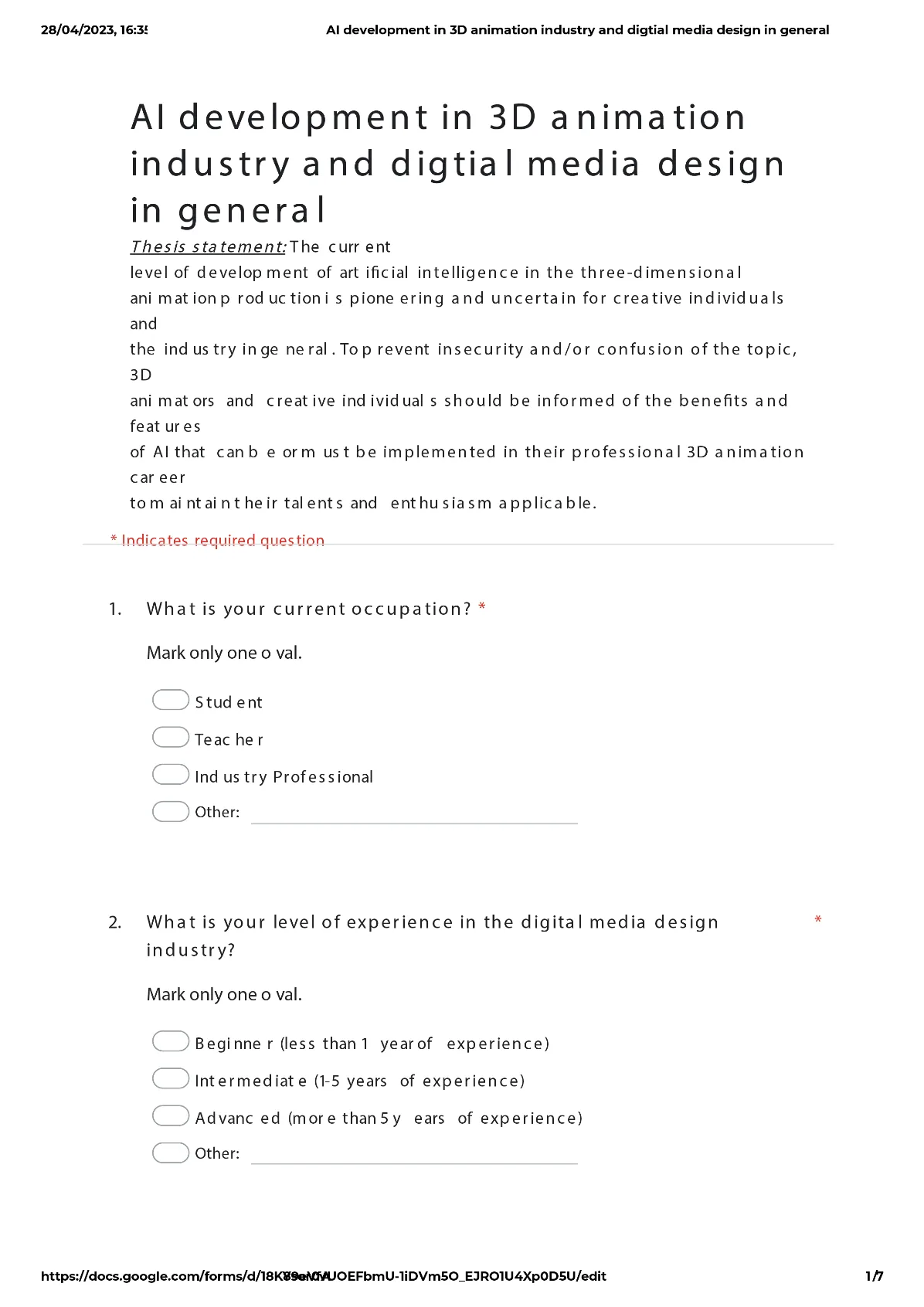
The current level of development of artificial intelligence in the three-dimensional animation production is pioneering and uncertain for creative individuals and the industry in general. To prevent insecurity and/or confusion of the topic, 3D animators and creative individuals should be informed of the benefits and features of AI that can be or must be implemented in their professional 3D animation career to maintain their talents and enthusiasm applicable.
AIM & OBJECTIVES
Aim
The purpose of this dissertation is to gain a better understanding of the current state of AI in the field of 3D animation production and creative industry in general. This includes learning about the latest trends, innovations, and features in the use of AI in this field. The research also aims to understand the potential impacts that AI technology may have on people working in the industry, as well as on the environment and a general understanding and recognition of the matter by people outside the industry. By gaining a deeper understanding of AI in 3D animation production, it may be possible to identify opportunities for further development and improvement in this field, as well as to anticipate and address any potential negative impacts that may arise.
Objectives
- Understand the functioning of artificial intelligence in creative industries, including the use of AI in 3D animation production.
- Explore current industry trends and standards for AI practice in the 3D animation field.
- Identify the technology and tools necessary for 3D animators to stay current with industry trends and innovations.
- Examine the direct impact of AI on the 3D animation industry, education, and career opportunities.
- Investigate the potential for sustainable industry practices and environmentally responsible use of AI in 3D animation production.
- Understand the level of general public’s awareness and recognition of the technology.
Structure of Dissertation:
- Introduction
- Background and context of the research
- Purpose and aim of the research
- Objectives and research questions
- Significance of the research
- Scope and limitations of the research
- Literature Review
- Overview of AI in creative industries
- Overview of 3D animation production and its use of AI
- Previous research and studies on AI in 3D animation production
- Current trends and innovations in AI and 3D animation production
- Methodology
- Research design
- Data collection methods
- Data analysis methods
- Ethical considerations
- Findings
- Overview of the current state of AI in 3D animation production
- The role of technology and tools in 3D animation production
- The impact of AI on the 3D animation industry, education, and careers
- The potential for sustainable practices and responsible use of AI in 3D animation
- Discussion
- Interpretation of findings
- Comparison with previous research and studies
- Implications for the 3D animation industry, education, and future research
- Conclusion
- Summary of key findings and contributions
- Implications for the 3D animation industry and creative industries in general
- Recommendations for future research
- Final thoughts and reflections on the research
- References
- List of sources cited in the dissertation
- Appendices
- Supporting materials (e.g. charts, graphs, interviews, survey results, etc.)
LITERATURE REVIEW
Introduction
This section aims to provide an overview of the current state of research on the use of AI in the design industry and 3D animation production specifically, as well as identify possible research gaps that can fulfilled in the final part of dissertation. The review will explore the various ways in which AI is being used in 3D animation, the potential benefits, and challenges of using AI, and the ethical and environmental considerations surrounding its implementation. By examining the existing research on this topic, this review aims to provide a comprehensive understanding of the use of AI in the design industry and its potential impact on the field. This section is organised to examine the journey of the secondary research, starting with the general description, definition and use of AI in digital media design industry onto the niche of AI use in 3D animation. To the current and future implications of the technology in 3D animation industry, and exploration of strategies for sustainable use of AI.
1. Introduction to Artificial Intelligence and its impact on labour market in general.
The first area of literature refers to the study of how artificial intelligence is impacting the labour market. This is an area that has received a lot of attention and study in recent years, as AI has the potential to significantly change the way that work is done and the types of jobs that are available. The explanatory literature within this field refers to the research and writing that aims to explain and understand the impact of AI on the labour market. This literature is easy to find as there is a great deal of interest in the subject and many researchers and organizations are studying it. Sources chosen for the research are selected from 2015 onwards to ensure that they are current and relevant. This is important because the field of AI is constantly evolving, and it is important to consider the most recent developments and research when studying the impact of AI on the labour market. By focusing on sources from 2015 onwards, the research is able to take into account the most up-to-date information and insights on this topic.
Artificial intelligence refers to the simulation of human intelligence in machines that are programmed to think like humans and mimic their actions. The term may also be applied to any machine that exhibits traits associated with a human mind such as learning and problem-solving (Investopedia, 2022 [online]). From a theoretical point of view, the impact of AI on employment and wages is ambiguous, but it may strongly depend on the type of AI and how it is developed and deployed in conventional labour market. To produce positive outcomes for employees, artificial intelligence must create new high-productivity tasks to replace those automated and boost productivity sufficiently to raise consumer demand hence increasing demand on human labour (Lane, M. and A. Saint-Martin, 2021 [online]). According to forbes.com, 38% of people expect AI technologies to completely eliminate jobs at their current workplace altogether in the next 3 years and by 2030, more than 20 million manufacturing jobs globally could be lost to AI-powered robots (matthewwoodward.co.uk, 2022 [online]).
However, machine learning does not represent an increase in artificial intelligence of the kind that could substitute machines for all aspects of human cognition, but rather one particular aspect of intelligence: prediction (Agrawal, Gans, and Goldfarb, 2018 [online]) when it comes to general labour market. Machine learning is one way to use AI. It was defined in the 1950s by AI pioneer Arthur Samuel as “the field of study that gives computers the ability to learn without explicitly being programmed” (Sloan, 2021, [online]).
Prediction is useful because it is an input into decision-making process. Prediction has no value in the absence of a decision. In this sense, each prediction task is a perfect match to a decision task (Agrawal, Gans, and Goldfarb, 2018 [online]). AI now has a strong position in organisations’ strategic decision-making processes. Five years ago, less than 10% of large companies had adopted machine learning or other forms of AI, but today 80% of them make use of the technology (Harvard Business Review, 2019 [online]). Most common and popular examples of such companies include Amazon with integration of algorithms into their recruiting process or Walmart using artificial intelligence for product lines decisions. Although, to what extent does this affect creative industry and 3D animation specifically?
2. Technical introduction and implementation of Artificial Intelligence into 3D animation production and creative industry in general.
This section explores the extent the artificial intelligence is integrated within the 3D animation production and the types and purposes of machine learning used in this specific field. Alongside with the examples of use of AI in the creative industry in general.
The concern is that AI is being acknowledged as the next era-defining technological innovation, changing how content online is created or even experienced on the internet (The Week Staff, 2022 [online]). The most popular example of such innovation is the field of generative artificial intelligence called text-to-image. The technology generates detailed original images based on simple written inputs. It uses billions if images from the web, including hard work of artists and selects specific images and generates a unique output, making it difficult for artists to make legal case against the technology (Strickland, 2022 [online]). This has left visual artists to fear the worst, questioning if these algorithms will replace them?
With regards to 3D animation production industry, a study of collective intelligence self-organisation helps to design methods to solve distribution and production problems of 3D animation systems (You Lv, 2022 [online]). For example, artists can use AI-powered software to quickly generate character models or environment assets, freeing up time and resources for more creative tasks. Another application of AI in 3D animation production is the use of neural networks to generate realistic character movements and facial expressions. These techniques, known as motion capture and facial capture, allow animators to quickly and accurately replicate natural human movements and expressions, resulting in more realistic and lifelike animation (Donnelly, 2022 [online]).
Artificial intelligence has also been used in the creative industry to assist with tasks such as general digital content creation and curation. For example, AI algorithms can analyse data from past successful campaigns and use this information to generate new content ideas or suggest changes to improve the effectiveness of future campaigns (Anantrasirichai, N., Bull, D, 2022 [online]).
3. Current market trends in the 3D animation industry using AI.
Some of the current market trends and aspects in the 3D animation industry that are being driven by AI include:
Improved efficiency and speed: AI can significantly speed up the animation process by automating certain tasks, such as character rigging and facial expression generation. For example, as discussed earlier, DeepMotion, a start-up that uses AI to animate characters, has developed a technology called "Action Units" that allows animators to quickly create realistic facial expressions and body movements for characters. This saves time and allows animators to focus on more creative tasks, such as storyboarding and character design (DeepMotion, 2020 [online]). This example also carries an aspect of enhanced realism and believability: AI can likewise be used to create more realistic and believable animations. Additionally, AI-powered software such as Blender's Denoiser tool can automatically remove noise and grain from 3D renders, resulting in higher quality and more realistic images (Blender.org, 2022 [online]). Blender is a free and open-source 3D computer graphics software toolset used for creating animated films, visual effects, art, 3D printed models, motion graphics, interactive 3D applications, and computer games.
Increased creativity: AI can also be used to generate unique and creative animation ideas. For example, the start-up AEye has developed an AI-powered tool called "AI-Generated Animations" that can generate unique character designs, backgrounds, and storylines based on a set of user-specified parameters. This allows animators to quickly generate new ideas and concepts without having to start from scratch (aEYE, 2022 [online]).
Increased demand for animated content: The COVID-19 pandemic has led to a surge in demand for animated content, as more people are staying at home and consuming media online. This has created new opportunities for 3D animators and studios, as companies and organizations look to produce animated content for a variety of purposes, including education, entertainment, and advertising (Romano, 2020 [online]). An example of where artificial intelligence fills in this niche is a company called Kinetix. It is a start-up that has developed an AI-powered, no-code platform for creating 3D animations. The platform is designed to make it easy for non-technical users to create professional-quality 3D animations without the need for programming or 3D modelling skills. The technology uses machine learning to analyse a user's drawings and uploaded videos and automatically generate 3D models and animations based on them (Yassine Tahi, 2022 [online]).
Overall, AI is transforming the 3D animation industry by improving efficiency, enhancing realism and believability, increasing creativity, and driving demand for animated content. As artificial intelligence continues to advance and become more widely adopted, it is likely that these trends will continue to shape the industry in the future.
4. Implications of artificial intelligence in a creative industry such as 3D animation production, and impact on different areas in general.
As discussed earlier the use of AI in 3D animation production raises concerns about job displacement. If certain tasks can be automated, there may be less need for human animators to do them, potentially leading to job loss or reduced job opportunities in the industry (Pannu, A., 2015 [online]). Another potential implication of artificial intelligence in 3D animation is the impact on the creative process itself. Some argue that the use of AI can lead to more repetitive or formulaic animation, as the algorithms may not have the same level of creativity as human animators. On the other hand, others argue that artificial intelligence can be a tool for creativity, allowing animators to try out new ideas and approaches that may not have been possible before (Holzapfel, Jääskeläinen and Kaila, 2022 [online]). In addition to the 3D animation industry, the use of AI in creative industries more broadly has the potential to impact a range of areas. For example, AI-generated art or music may challenge traditional ideas about what counts as "creative" and who gets credit for creative work. AI may also impact the distribution and consumption of creative content, as algorithms may be used to personalise recommendations or curate content for specific audiences.
Regarding a more technical implications of such technology in creative industry, it is important to mention that implementing AI on a production floor is challenging, because most previous implementations were designed and evaluated in lab environments (Arinez, Chang, Gao, Xu, & Zhang, 2020 [online]). To build training datasets for AI systems, it may be necessary to collect data from actual machine processes. For example, data on machine failures or malfunctions would be needed for predictive maintenance, diagnostics, or prognostics. However, this data collection process can be risky for the developer and costly for the manufacturer. In addition, supervised learning, which is an important part of AI implementation, requires data labels. This labelling process can be time-consuming and may require expert labour in production applications (Devagiri et al., 2022 [online]).
Overall, the implications of AI in the 3D animation industry and other creative industries are complex and multifaceted. While AI has the potential to streamline certain tasks and open new creative possibilities, it also raises questions about job displacement and the role of humans in the creative process. As AI continues to evolve and be adopted in these industries, it will be important to carefully consider these issues and their potential impacts.
5. Sustainable use of AI in 3D animation production and creative industry overall.
AI can help reduce time and resources spent on production, leading to cost and energy savings. However, it is important to consider the sustainable use of AI in order to ensure that its benefits are realised without negative consequences given earlier.
One way to ensure sustainable use of AI in 3D animation production is by using it to enhance rather than replace human efforts. As discussed previously, AI can be used to assist animators with facial expression and body language recognition, allowing them to focus on more creative and complex aspects of animation. This not only increases efficiency, but also helps to preserve jobs and skills in the industry. Another aspect to consider is the environmental impact of AI. The production of 3D animation can be resource-intensive, with large amounts of data and computing power required. By using AI to optimise resource use and minimise waste, the environmental impact of production can be reduced. For example, AI can be used to optimise rendering processes, reducing the amount of time and energy needed to produce high-quality visuals (Waltersmann et al., 2021 [online]).
In addition, it is important to consider the ethical implications of AI in the creative industry. AI can potentially be used to create content that is biased or perpetuates harmful stereotypes. It is important to ensure that AI is trained on diverse and representative data, and that it is monitored and regulated to prevent the proliferation of harmful content (Waltersmann et al., 2021 [online]). Overall, the sustainable use of AI in 3D animation production and the creative industry in general requires a balance between leveraging its benefits and minimising its negative impacts. By using AI to strengthen rather than replace human efforts, optimizing resource use and minimising waste, and ensuring ethical considerations are taken into account, the creative industry can utilise the power of AI in a sustainable and responsible manner.
CONCLUSION
In conclusion, this literature review explored, in accordance with the aims and objectives, the topic of artificial intelligence use in 3D animation production and creative industry in general. The sustainability, implications and benefits factors of the matter were discussed and researched in-depth, using a variety of different relevant and reliable academic and non-academic resources with references to them.
The adoption of AI in 3D animation production is likely to continue to grow in the coming years as the technology becomes more advanced and widely available. While there are certainly challenges to be addressed, such as the potential for job displacement and the need for appropriate training and education, the benefits of AI in this field are clear. By leveraging the power of AI, animators and studios can create more compelling and engaging content, reaching a wider audience, and driving innovation in the industry. The report also revealed how important it is to note that AI is not a replacement for human creativity and artistic vision. Rather, it should be seen as a tool to enhance the capabilities of animators and facilitate the production process.
Primary research and final discussion will allude to unanswered questions and gaps identified or missed in the literature review, such as the general consciousness of the matter by people outside of industry and reveal real time resources every student or professional should be aware of to stay up to date with the trends and keep their skills relevant. It will also discover new viewpoints and conclusions for this study and continue to educate a personal passion for 3D animation and visualisation.
METHODOLOGY
Introduction
Data, or evidence to support the assumptions and definitions in the research report and final dissertation, were collected in different ways and stored in different types. For example, primary data, is collected first-hand by a researcher for a specific research objective. This type of research can be accomplished by different methods such as interview, online questionnaire and others. This data can be either qualitative or quantitative.
Whereas secondary research uses secondary data. This means that someone else has already collected the information and it has been stored on record for the use by other researchers. The secondary researcher will re-analyse this data for a new purpose and its relevance to the objective.
The difference between qualitative and quantitative data is the numerical value and quality behind the numbers. Quantitative data signifies any information that can be counted or measured and stored as numbers. Qualitative data is expressed in terms of language rather than numerical value.
While primary research methods, such as: surveys, interviews, and case studies, can be valuable for gathering first-hand insights and data on a topic, secondary research can also be a valuable tool for exploring the subject and more appropriate for this specific research for several reasons.
Access to data: Secondary research allows researcher to access a wide range of data and information on the topic, including industry reports, academic articles, and news articles. This can help to build a comprehensive understanding of the topic and identify key trends and issues in the industry.
Time and cost: Primary research methods can be time-consuming and costly, requiring significant resources to conduct surveys, interviews, and other forms of data collection. Secondary research, on the other hand, can be less time-consuming and less expensive, as the scholar can access existing data and information on the topic.
Expert analysis: Secondary research can give researcher access to expert analysis and commentary on the topic, including insights from industry thought leaders, academic researchers, and other experts. This can help scholar to gain a deeper understanding of the topic and identify key issues and trends in the industry.
Credibility: Secondary research can provide a strong foundation for the dissertation, as it allows researcher to draw on existing research and data from reputable sources. This can help to strengthen the credibility and validity of the work, particularly if it has cited reputable sources and used well-established research methodologies.
Time Management
Figure 1 shows the timeline for writing each section to help with overall preparedness for submission of the research report in semester 1 and Figure 2 recognition for the second semester time in development of final dissertation. Illustrated clearly in the graphs below, the data collection and analysis take up a significant amount of time available in semester one. This is to allow for continuous research into articles and academic resources to create a credible, relevant and reliable report that contains up to date information and data. The time management Gantt chart is a general reference to stay on track for final dissertation development and submission, however, large and significant matter as a research report required alterations, breaks and changes within the time plan and development process overall. This alteration allowed the style and delivery of the report and final dissertation in semester 2 to be improved in order to enhance reading experience and quality of reference.
Methods
One reason for the regulated use of primary research in this dissertation focused on the use of AI in 3D animation and digital media is the technical complexity of the subject matter. This area requires advanced technical expertise, and therefore, it may be challenging to access and gather data through primary research methods. In contrast, secondary research, as mentioned before, provides the convenience of utilising pre-existing data, such as published studies, reports, and statistical data, which can be utilized to support arguments and augment the research. However, despite these limitations, primary research can provide unique insights into the use of AI in 3D animation and digital media, which cannot be gleaned from secondary sources. Primary research can capture real-time data, offer a more comprehensive understanding of the context, and allow researchers to explore specific issues and topics in greater depth. Therefore, it is essential to consider the balance between the benefits and limitations of primary research when deciding which method to use for a dissertation.
The efficiency of this process was maintained by organising resources and researched information into the word document, from which the final research report was shaped later and applied in the final dissertation. In addition, following the plan and time management graph to stay on track. MyBib Citation Generator internet browser add-on (MyBib Contributors, 2022 [online]) was used to cite these findings together with manual citation where the use of add-on was unavailable, and gantt.io (Gantt.io, 2022 [online]) and Google Sheets (Google.com, 2020 [online]) websites to develop time management gantt charts.
Questionnaire / survey
When conducting primary research, two common research methods are questionnaires and surveys. They are common because they are easier, more cost and time efficient than other primary research methods such as, focus groups, interviews and social media monitoring are. While terms survey and questionnaire are often used interchangeably, they have distinct differences. A questionnaire is a self-managed set of questions designed to extract information from respondents, which can be completed online, by mail, or in person. In contrast, a survey is a structured research method that involves collecting information from a representative sample of respondents through an interview, typically conducted over the phone or in person. Questionnaires are often used when a researcher wishes to gather data on a particular topic or opinion from a large sample of respondents. They are typically standardized and structured and the respondents are well established and knowledgeable in the presented topic, allowing researchers to gather quantitative data that can be analysed statistically. Surveys, on the other hand, can provide more in-depth and qualitative data by allowing for open-ended questions and follow-up queries of a general public and individuals that are not related to the subject. As a result, surveys are often used when a researcher seeks to gather more broad and contextualised data.
The survey conducted during research period for this dissertation is aimed to highlight how the average person perceives and identifies the use and development of AI in the 3D animation and digital media industry in general. From which can then be seen the pattern and level of recognition of subject’s matter. The publishing platforms were Facebook, Snapchat, and University email system. On Facebook the survey has been posted into three public groups – Dissertation Survey Exchange (28.2K members), Dissertation Survey Exchange (32.0K members), and UK Participants | Thesis/Dissertation Survey Exchange (1.6K members). Survey has also been sent to fellow student from cohort through university email system (112 members). This large reach was planned to gather numerous responses in a short time. The method and platform for the survey was curated in Google Forms, past positive experience with this platform established its reliability, incorporating the automated creation of result graphs in different forms. This process assisted with speeding up the data collection and analysis processes. When it comes to data protection, Winchester University ethics forms have been registered and signed by lecturers, the Google account holders have sole accessibility and supervision over the form contents and shareable link. All the responses were anonymous, and no personal data has been collected. The survey questions were simplified to ensure different demographic groups could interpret the information. This furthermore meant the survey experience was enjoyable and quick, instead of troublesome and time-taking to the respondent, minimising a lack of engagement that could undermine their responses.
RESULTS & ANALYSIS
Introduction
To meter how the general population perceives the matter AI development in creative industries, a comprehensive research study was conducted utilising both qualitative and quantitative methods. The results were carefully curated to accommodate to the desired target audience and were published and monitored over a set period of time. The findings of this study were contrasting, with a total of forty survey respondents providing valuable visions into the matter. Despite the determination to this primary research method, there was some disappointment regarding the limited feedback received from all desired demographic groups. Nevertheless, it is important to note that the research has still managed to gather valid and high-quality results, which provided a deeper understanding of how the general public views the matter at hand. These findings will serve as a valuable background information for future studies, as they shed light on the perspective of the average person in regard to the topic being studied.
Method analysis
All results from primary research were analysed via grounded theory analysis method. It is a qualitative research method that intends to develop a theoretical construction or model based on the data collected from the research contributors. The process of grounded theory analysis involves systematically analysing the data to identify patterns and relationships, which are then used to generate a theory or model that explains the phenomenon being studied. The key aspects of this method include inductive approach, iterative process, constant comparison, theoretical sampling and saturation (The, 2014 [online]). Grounded theory analysis follows an inductive approach, meaning that the theory is developed based on the data collected from the research participants, rather than being insisted on the data from pre-existing concepts or theories. The process of this analysis method is iterative, which means that data collection, data analysis, and theory development occur simultaneously and are constantly processed throughout the research procedure. It also involves comparing data with other data and with the emerging categories and concepts that have been developed from the analysis. This process allows for the identification of patterns and relationships that can be used to refine the categories and concepts. A process of theoretical sampling is the sample with selected based on the emerging theory, rather than the theory being developed based on the sample. It aims to reach a point of theoretical saturation, where the data collected no longer reveals any new information, and the theory developed can explain the phenomenon being studied. The end result of a grounded theory analysis is a theoretical framework or model that explains the phenomenon being studied, which can be used to develop further research questions or guide practical applications of the theory (The, 2014 [online]).
Survey analysis
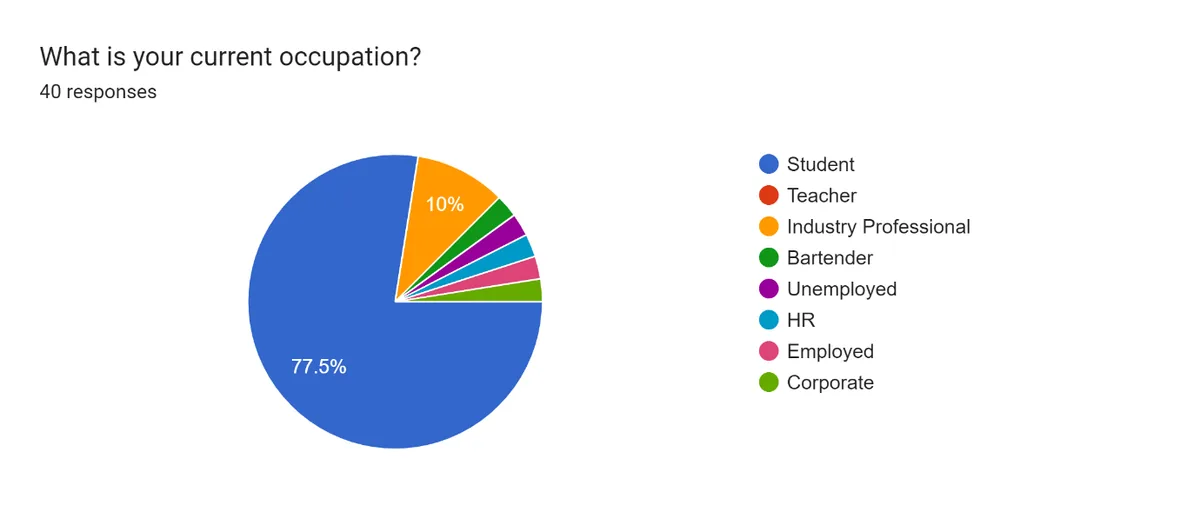
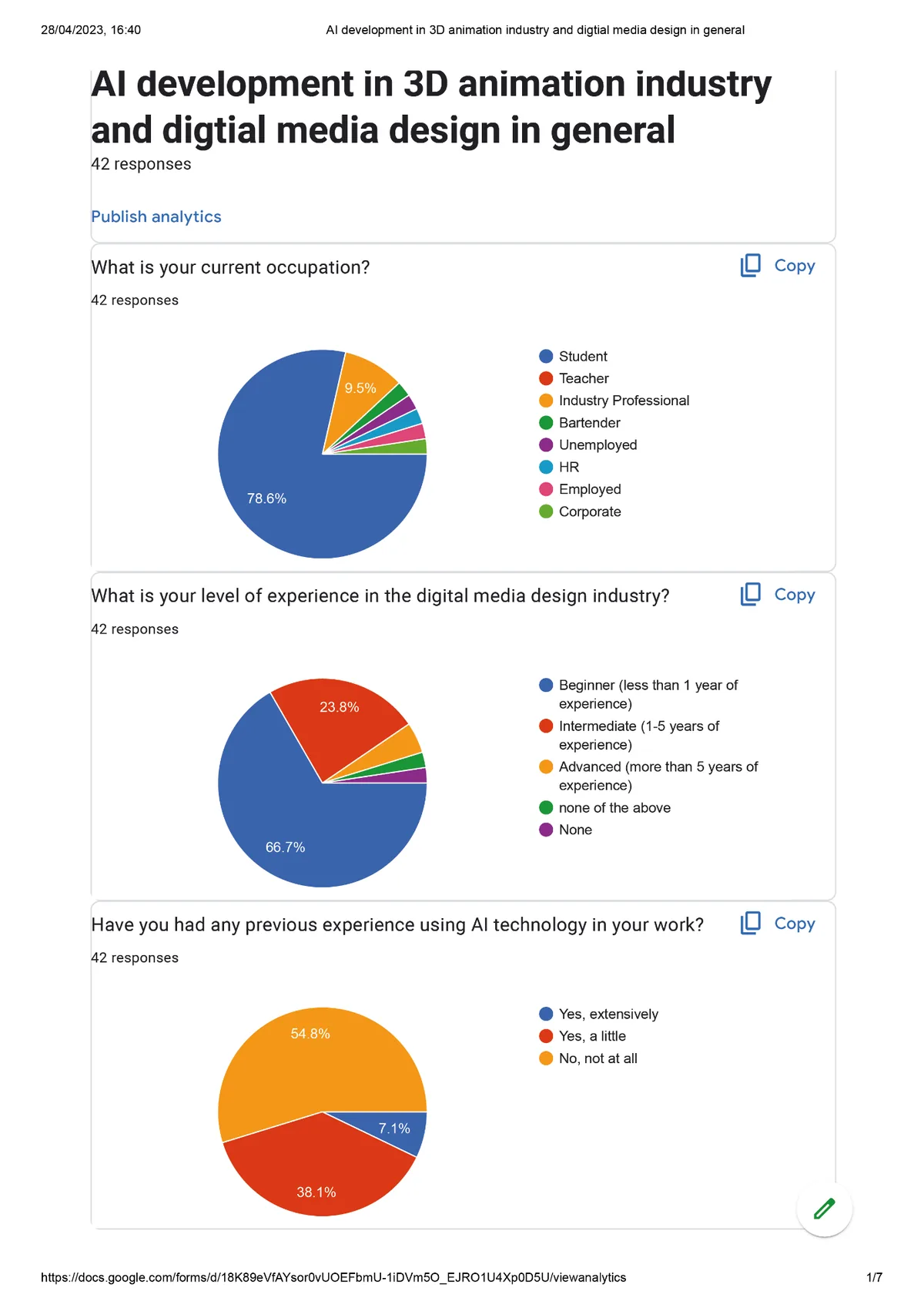
Essentially, Figure 3 shows that the results gathered during this survey is expressive of different demographic groups specified and not specified by the given answers, ‘student’, ‘teacher’ and ‘industry professional’ were ready made answers in the question and the rest are stated by the respondents. 77.5% of participants responded within the desired target audience of students in the core of dissertation’s thesis research question. The next most predominate demographic group is industry professionals accounting for 10% of responses and the rest are general public that are not related to the industry. Respondents are drawn from diverse demographic backgrounds, thus ensuring that the data collected is balanced and representative. This diversity in the sample population enhances the reliability and validity of the data, making it suitable for robust analysis and drawing meaningful conclusions.
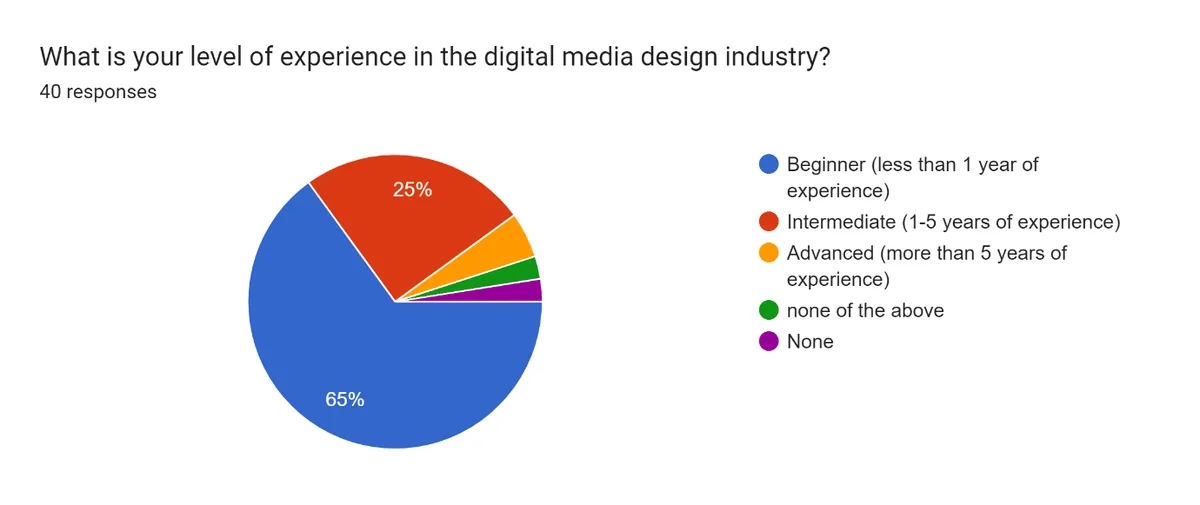
Figure 4 demonstrates a 65% of respondents identifying themselves as beginners in the digital media industry, further supporting the credibility of the results in the next questions, following the trend and the purpose of this survey. 25% of respondents distinguish themselves as intermediate in the digital media design industry. The remaining 10% of respondents who are outside of the industry further demonstrate the importance of reaching out to diverse audiences to better understand the needs and perspectives of those who may not be currently involved in digital media. Generally, these results provide valuable insights into the bigger picture of the personas participating in the survey, as well as the current state of the digital media industry and suggest areas for potential growth and development.
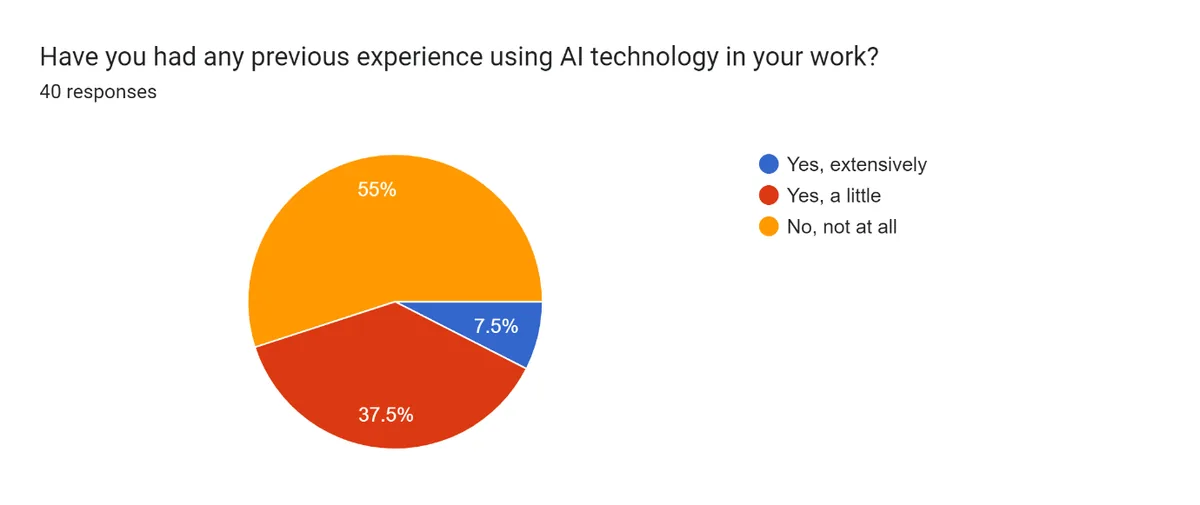
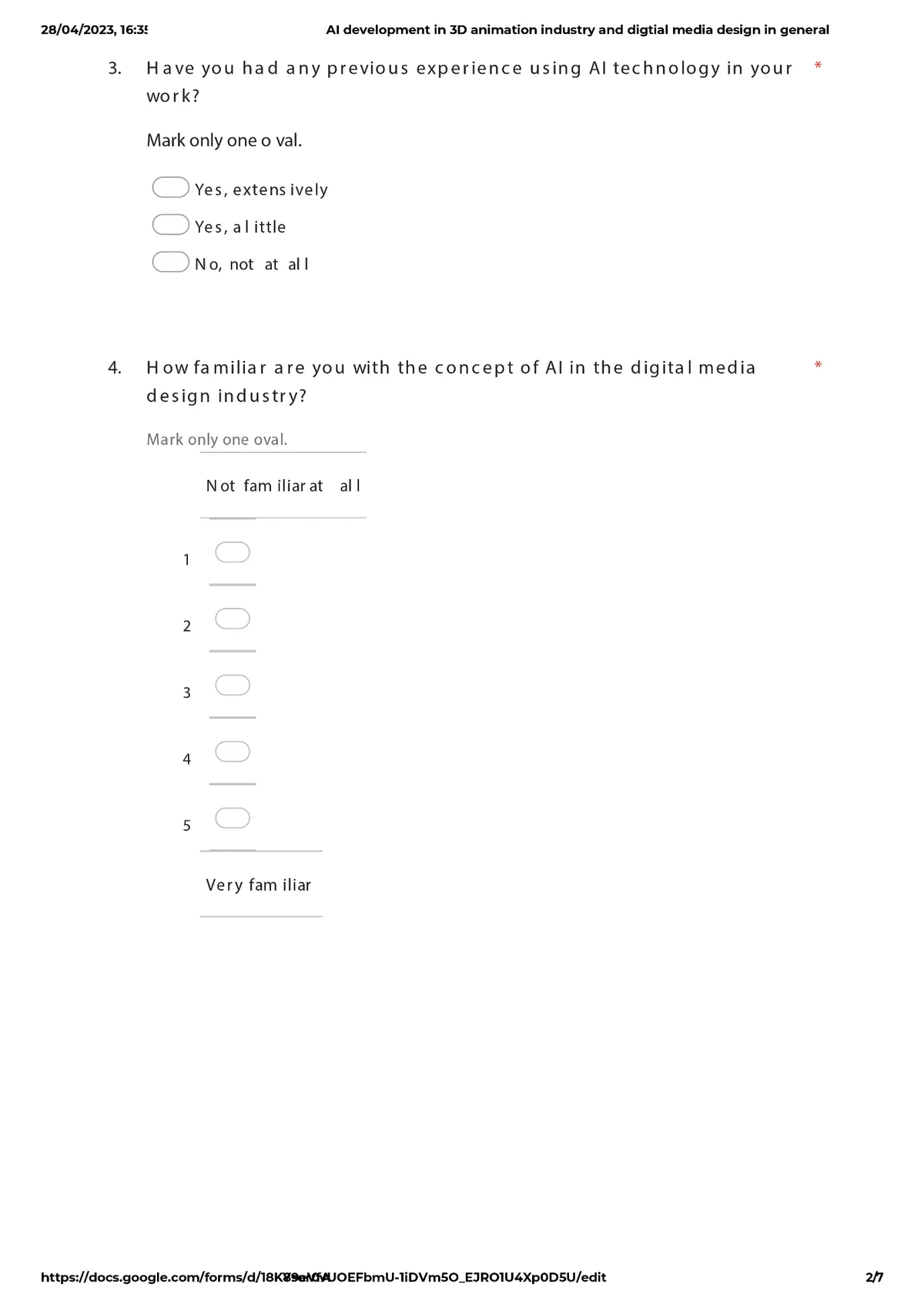
A particularly intriguing measurements in Figure 5 as they are in the contrast with the previous findings. Although 90% of the respondents have had an experience in the digital media design industry, a bigger half of them (55%) have not had any experience using AI technology, survey discovers. However, 45% of respondents have had some experience using AI technology and its trends, which indicates that there is some level of adoption and utilisation of AI technology in the digital media design industry. This finding is particularly interesting because it suggests that while the digital media design industry has been around for some time and has been using digital tools and technologies to create and design content, the implementation of AI technology has not been as widespread. This could be due to various reasons, such as the perceived complexity of AI technology or a lack of awareness of the potential benefits of using AI in digital media design.
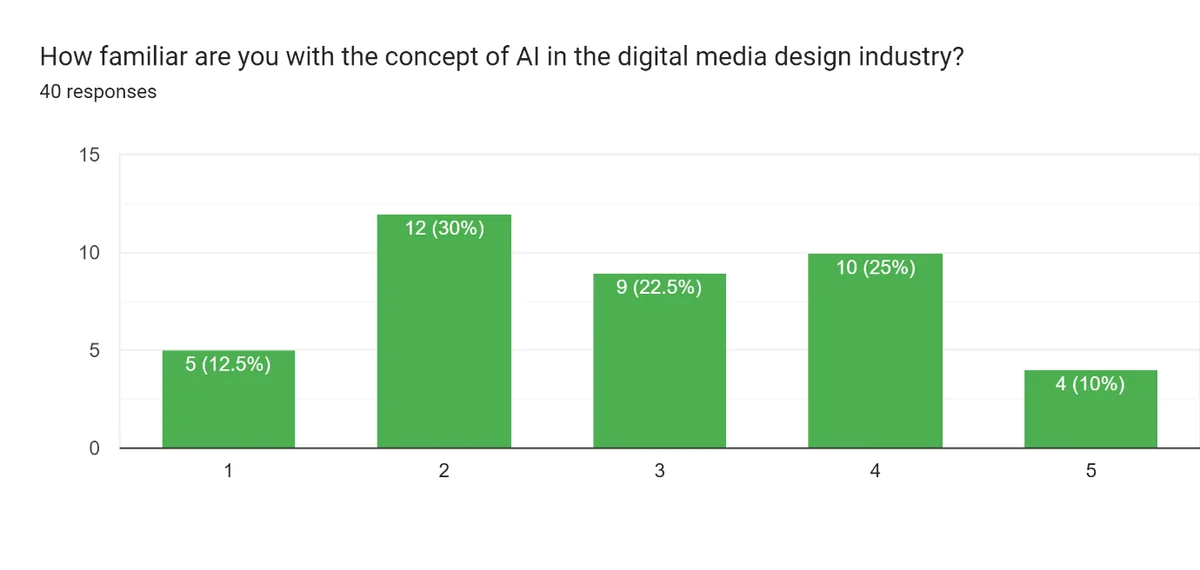
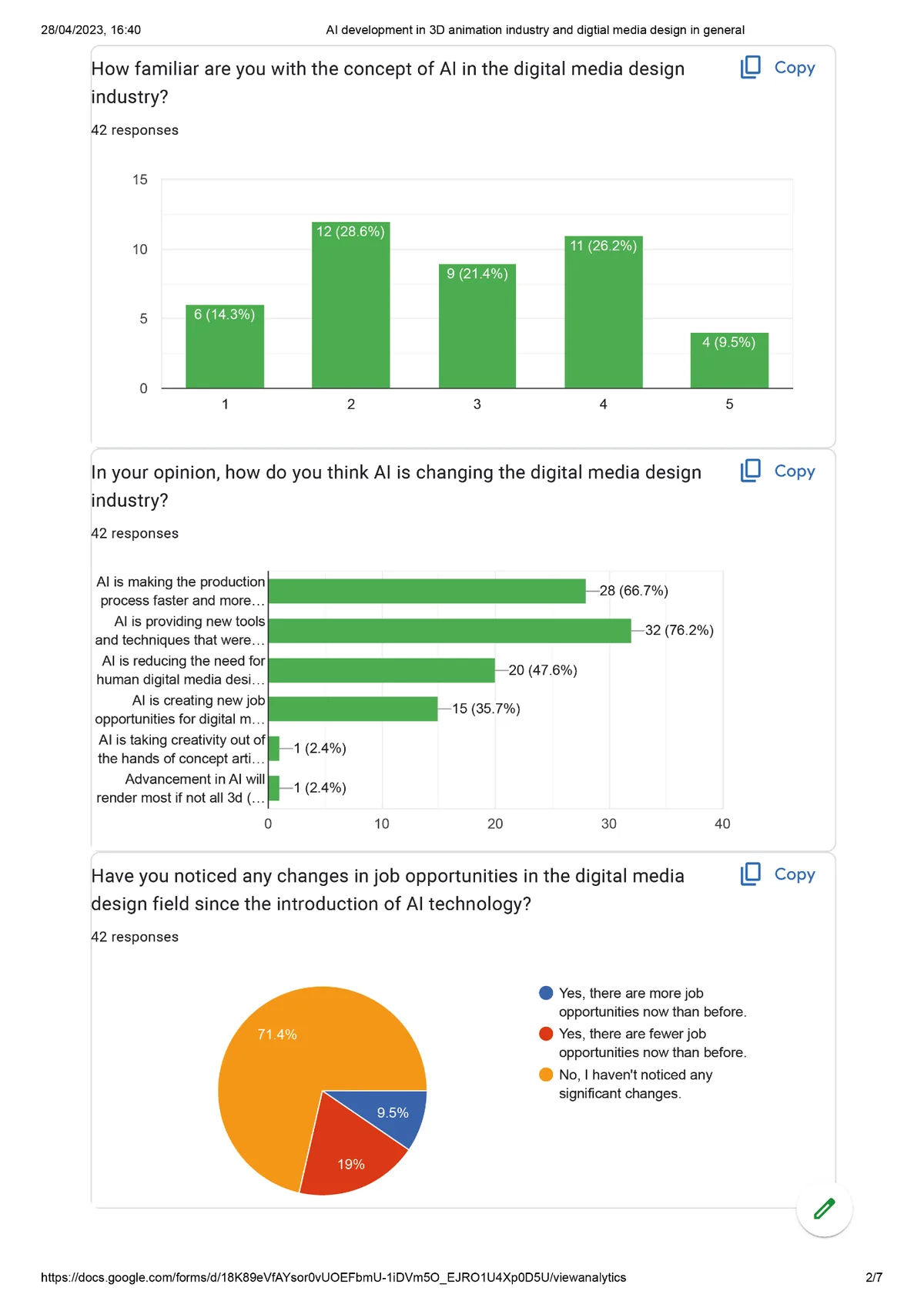
Noticeably illustrated by Figure 6, there is a wide spread of responses regarding to the level of familiarity of the concept of AI in the digital media design industry in the participants’ current experience. However, a bigger half of responses (65%) are between the extents of 1 and 3 indicating a substantial proportion of the respondents have limited understanding of the aspects of AI in the industry. Central tendencies, such as mean, median, and mode, can be calculated from the data set that has been gathered. The mean scale of extent is calculated at 2.9 with a standard deviation of 1.2. Results indicate that the average level of familiarity with AI in the digital media design industry is moderate, leaning towards ‘limited understanding’, as identified earlier. The standard deviation of 1.2 suggests that the data is spread out, and there are some participants with a higher level of familiarity with AI in the industry.
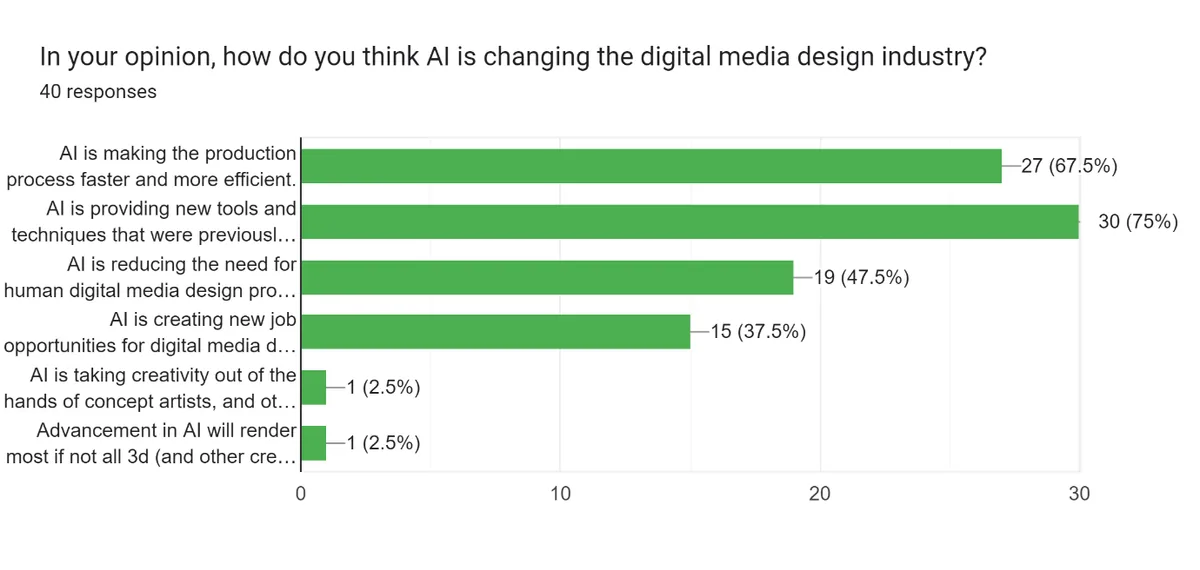
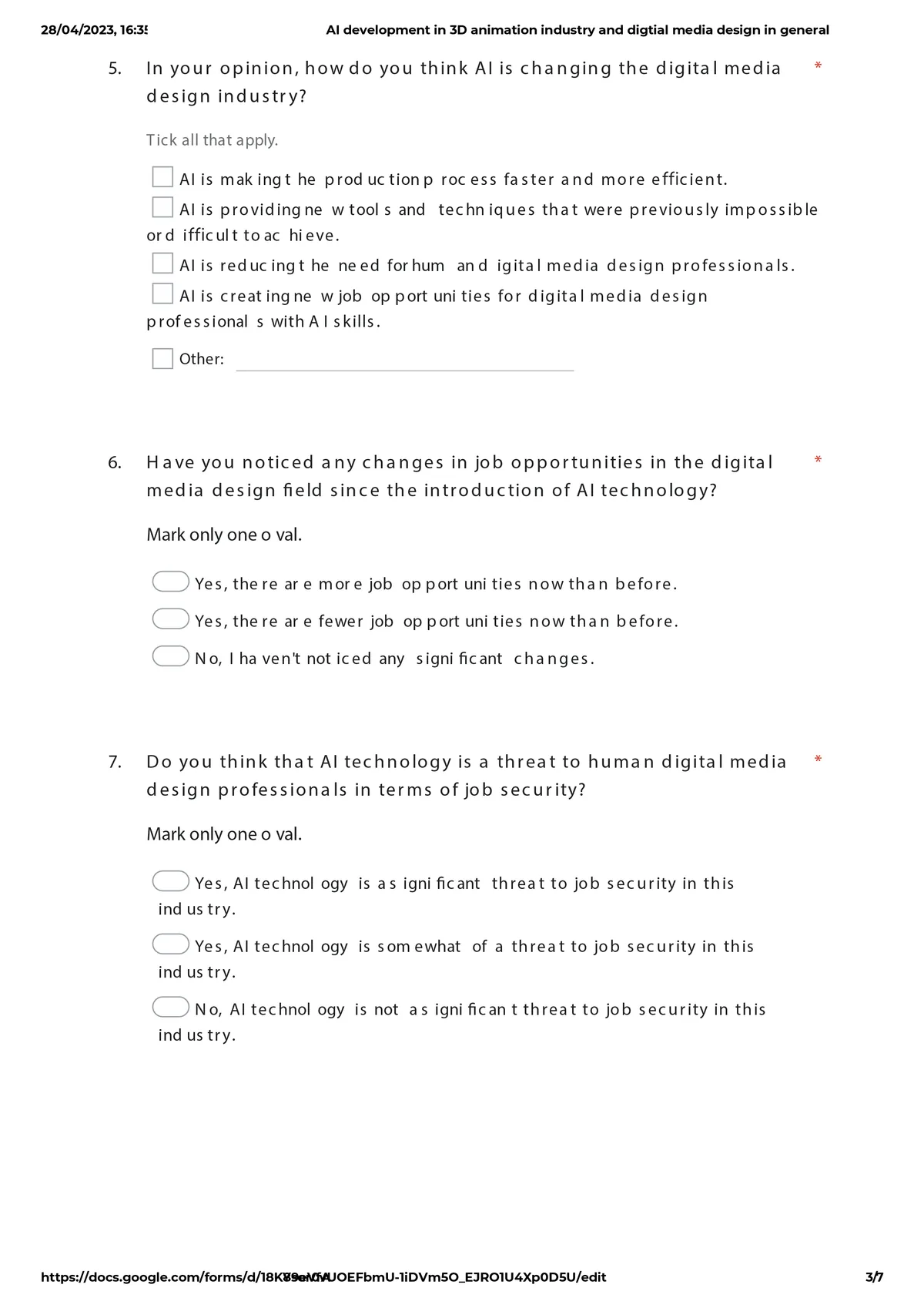
In Figure 7 respondents fairly recognise that AI is ‘making the production process faster and more efficient’ and ‘providing new tools and techniques that were previously impossible or difficult to achieve’ as the biggest influence factors on the digital media design industry. The least affecting factors are that ‘AI is reducing the need for human digital media design professionals’ and ‘AI is creating new job opportunities for digital media design professionals with AI skills’ according to the data gathered from participants. However, two of the respondents have given their unique thoughts on the matter, stating that “AI is taking creativity out of the hands of concept artists, and other creative jobs. It also steals artwork to use in its creations without payment or credit” and “Advancement in AI will render most if not all 3d (and other creative) jobs useless in the not-so-distant future”.
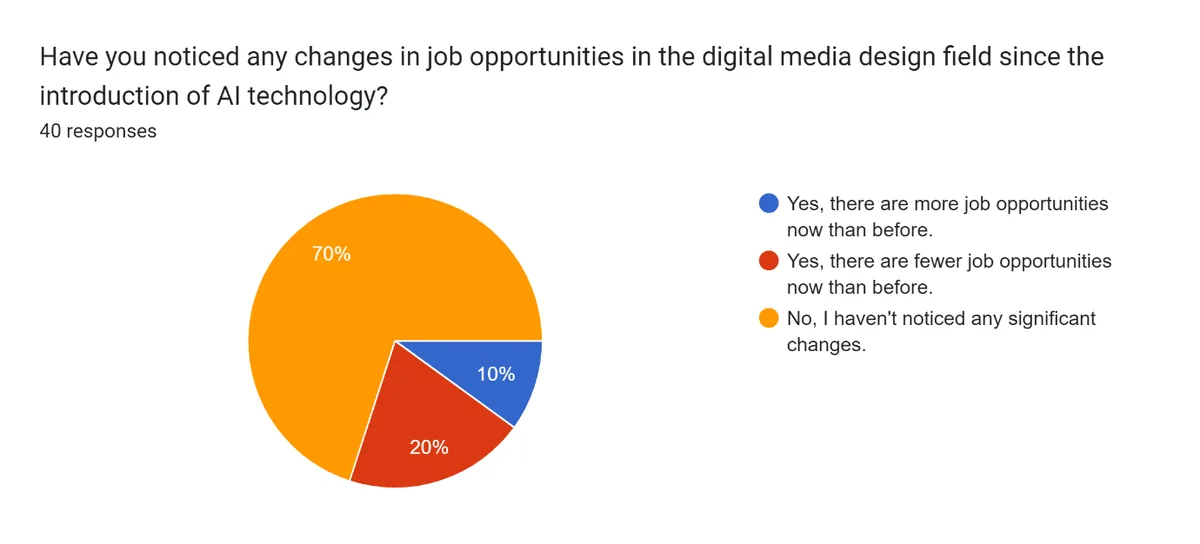
Based on the data presented in Figure 8, it can be inferred that the majority of respondents have not observed any significant change in the job opportunities in the creative industries due to the development of AI. This suggests that the impact of AI on employment in the creative industries may not have been as significant as some people may have initially expected. Nevertheless, it is worth noting that 30% of the respondents did observe changes in the job market. Of this group, 20% believed that there were fewer job opportunities than before, which may suggest that certain job roles within the creative industries have been automated or replaced by AI technology. This is consistent with the general trend of automation affecting certain industries and job roles in recent years. On the other hand, 10% of respondents believed that there were actually more job opportunities than before the development of AI. Which is in a contrast with the results from the next question (Figure 9).
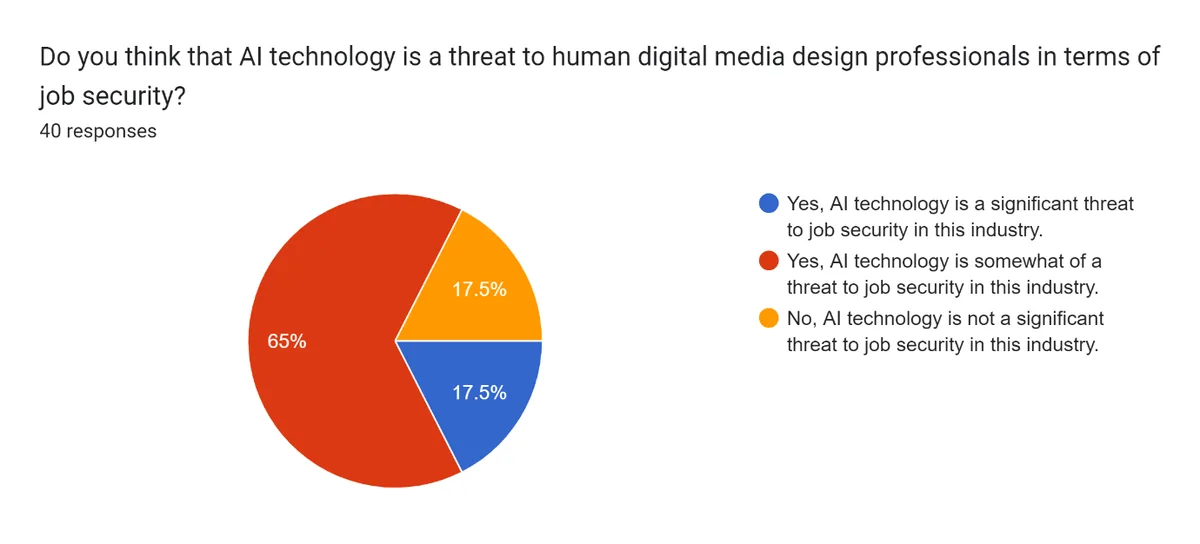
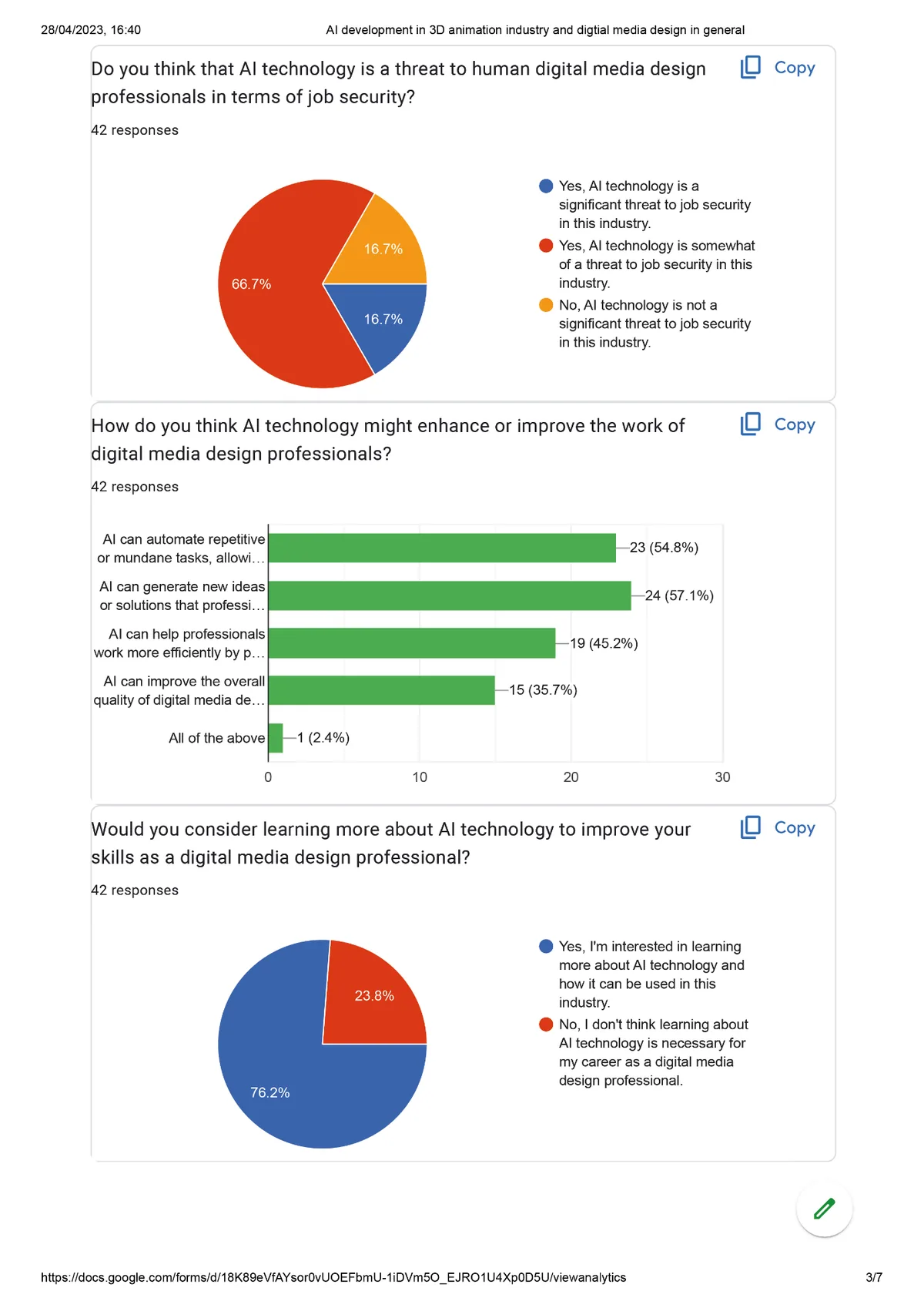
In a surprising contrast to Figure 8, 82.5% of respondents think that AI is either a significant or deficient threat to jobs in the industry, Figure 9 demonstrates. Despite those 17.5% in disagreement with the threat of AI on jobs, this result in Figure 9 is concerning and reinforces the idea that general public is concerned about the AI development and also lack general knowledge of its development and implementation.
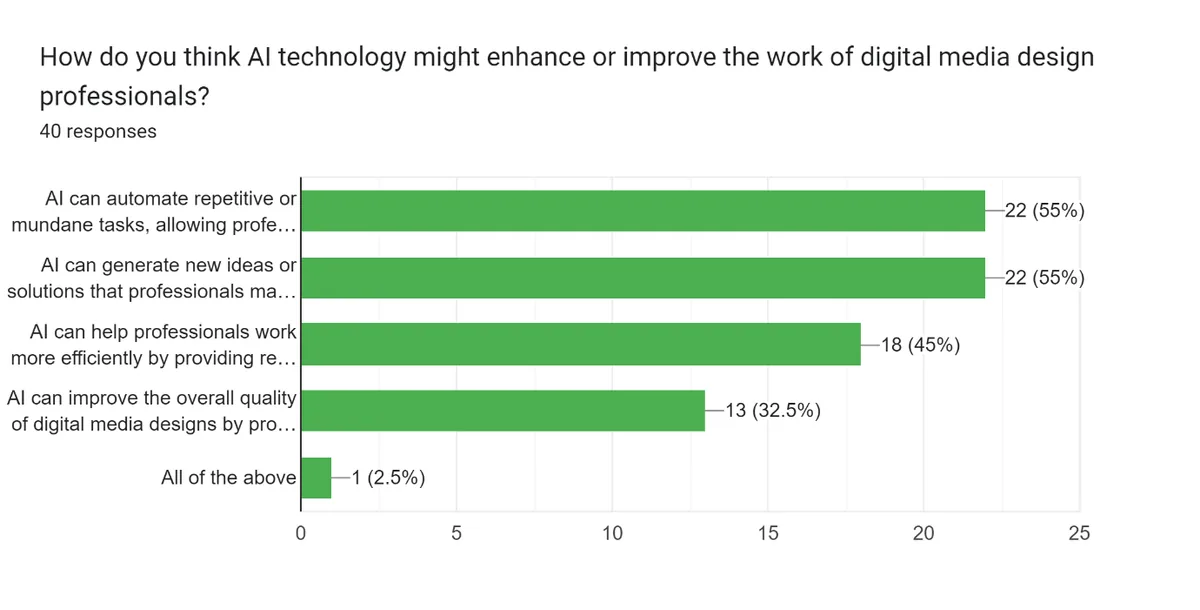
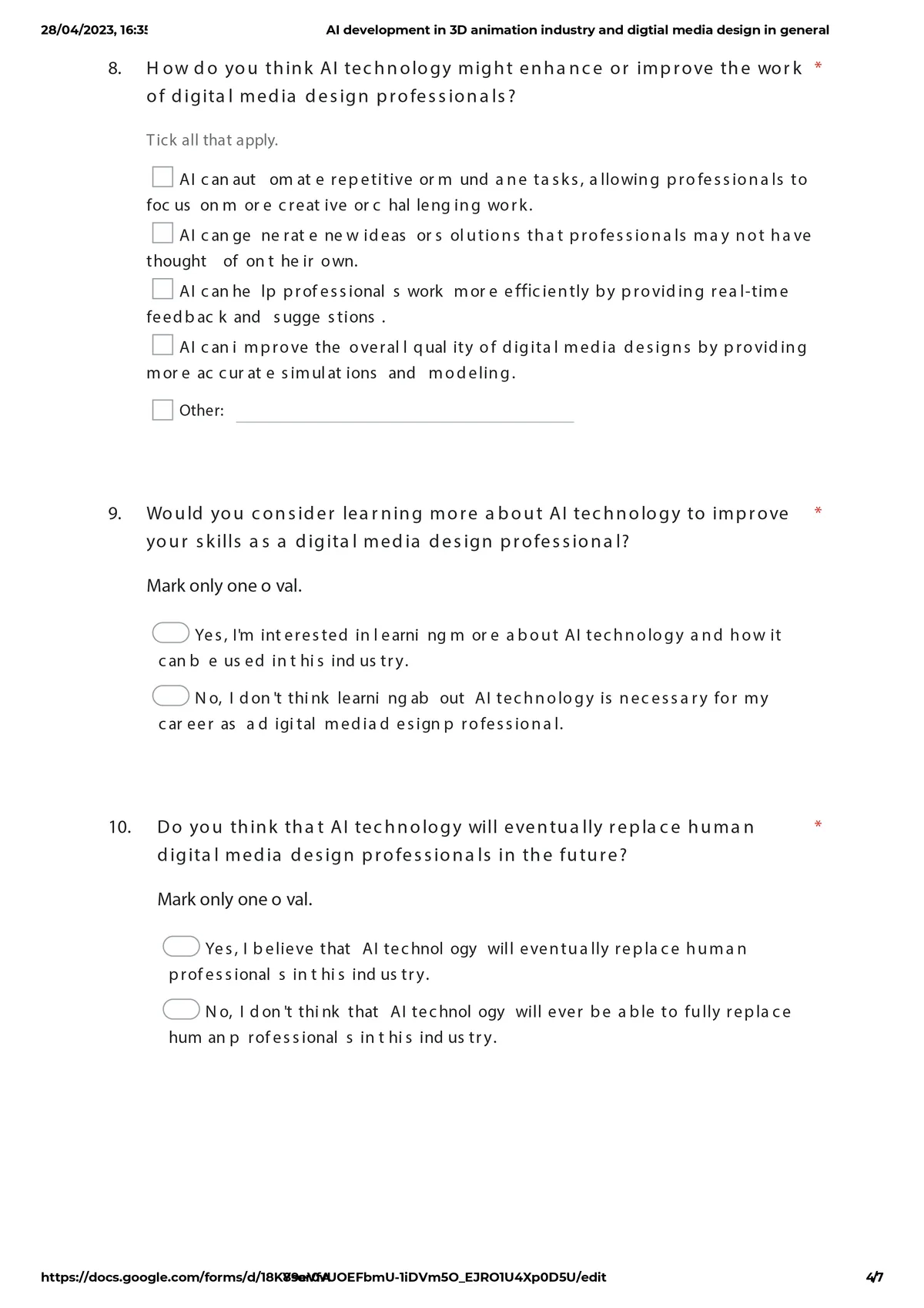
The most popular points for AI potential improvement and appropriate influence on digital media design professionals are that AI ‘can automate repetitive or mundane tasks, allowing professionals to focus on more creative or challenging work’ and ‘can generate new ideas or solutions that professionals may not have thought of on their own’ in Figure 10. An expected result, as human creativity will always be required, but some of the more repetitive work can be transferred to the hands of AI.
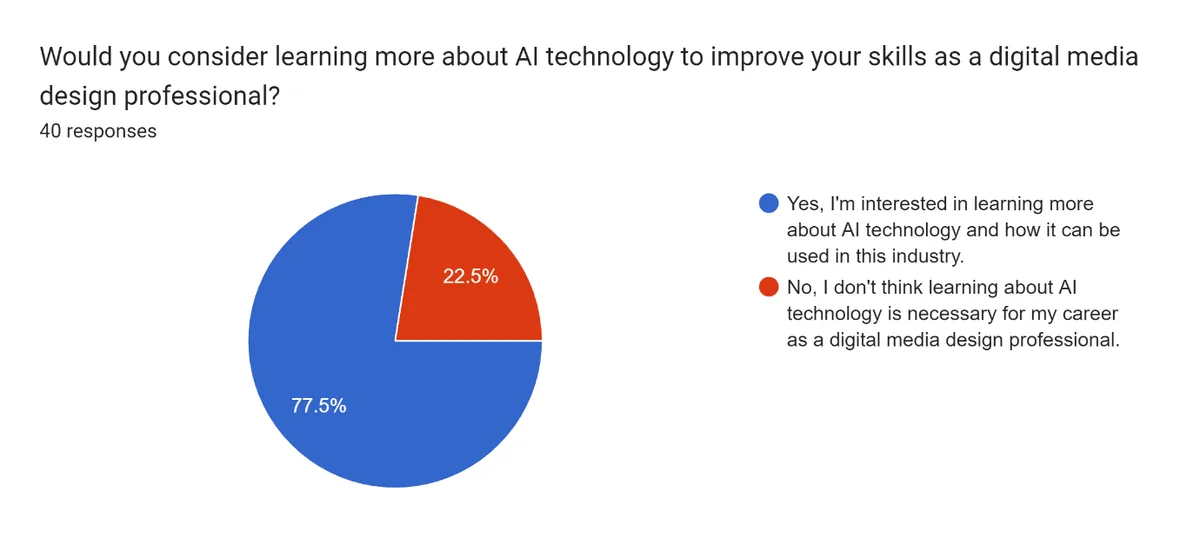
The majority of respondents in Figure 11 (77.5%) consider learning more about AI technology to improve their skills. This could be due to many aspects and results gathered from the previous questions.
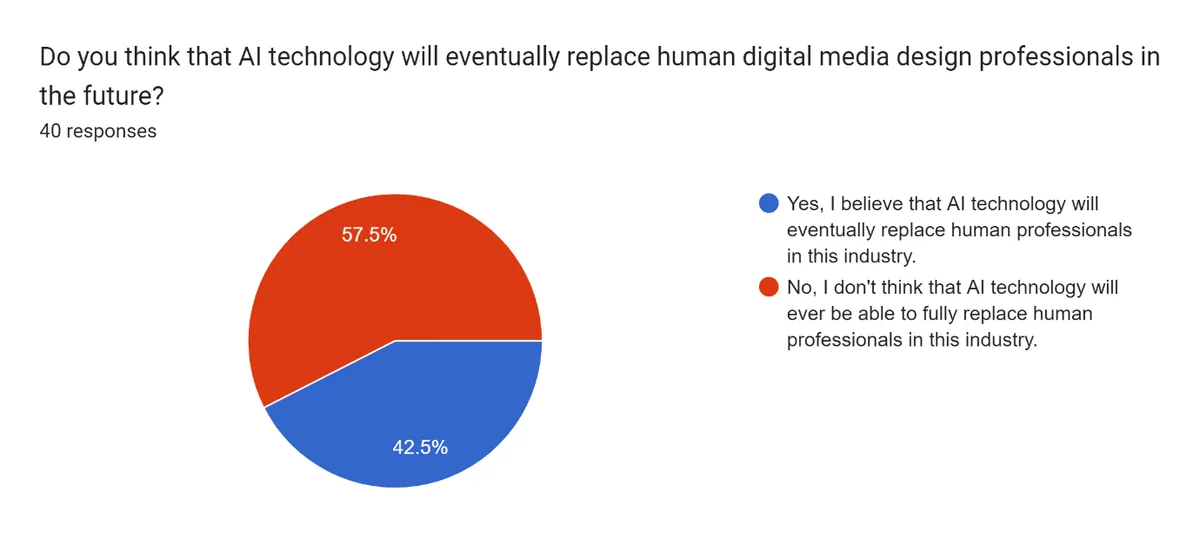
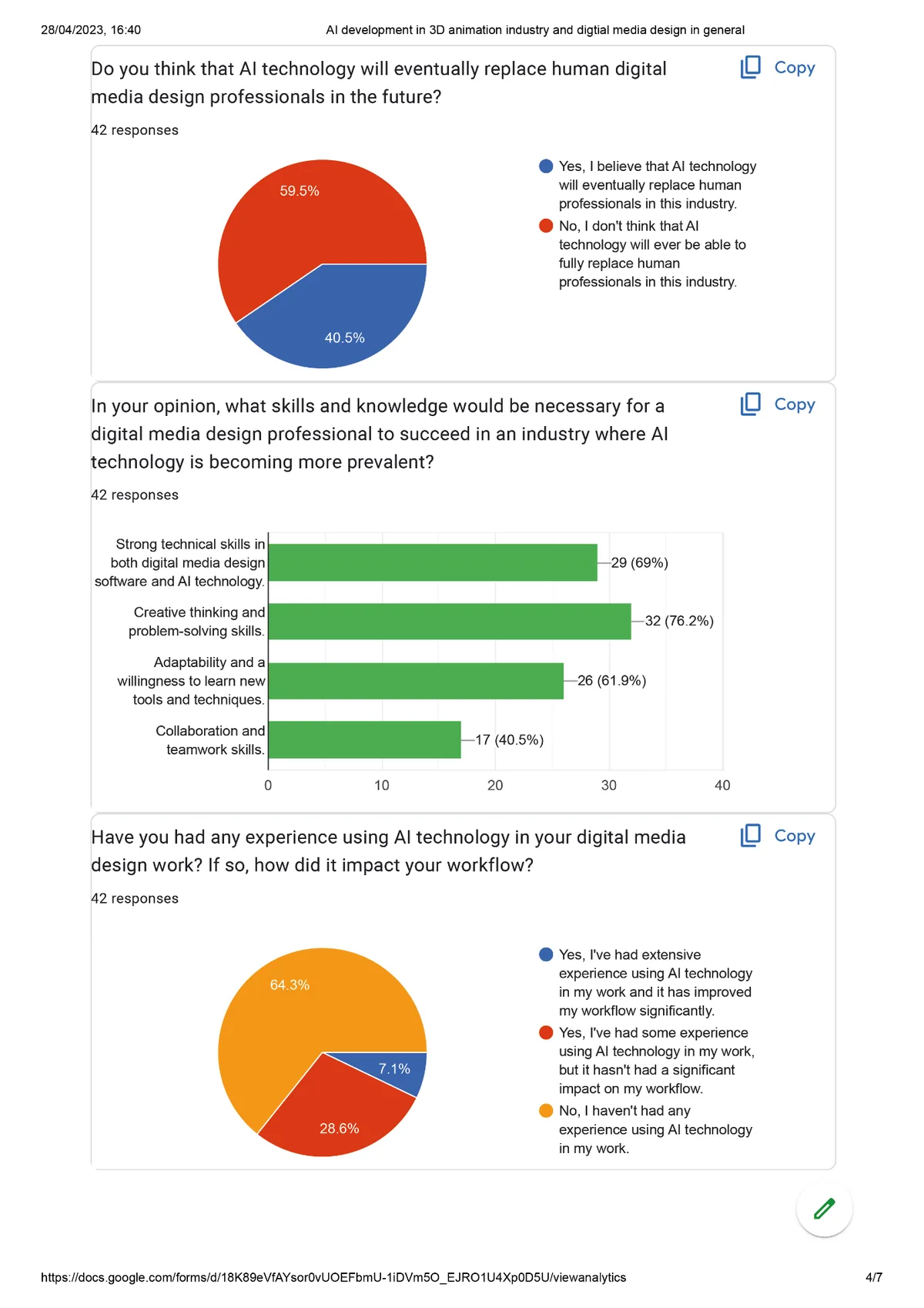
The respondents had a predominantly optimistic view of the future of AI technology replacing human digital media professionals, Figure 12 establishes. However, almost a half of audience (42.5%) think that AI will end up replacing creative professionals in their industries. This shows a clear concern to research and analyse; therefore, it is crucial to conduct further research and analysis on the impact of AI on creative professionals in order to fully understand the extent to which AI technology will replace human professionals in this field. This dissertation could potentially contribute to this important area of research and provide valuable insights for stakeholders in the creative industry.
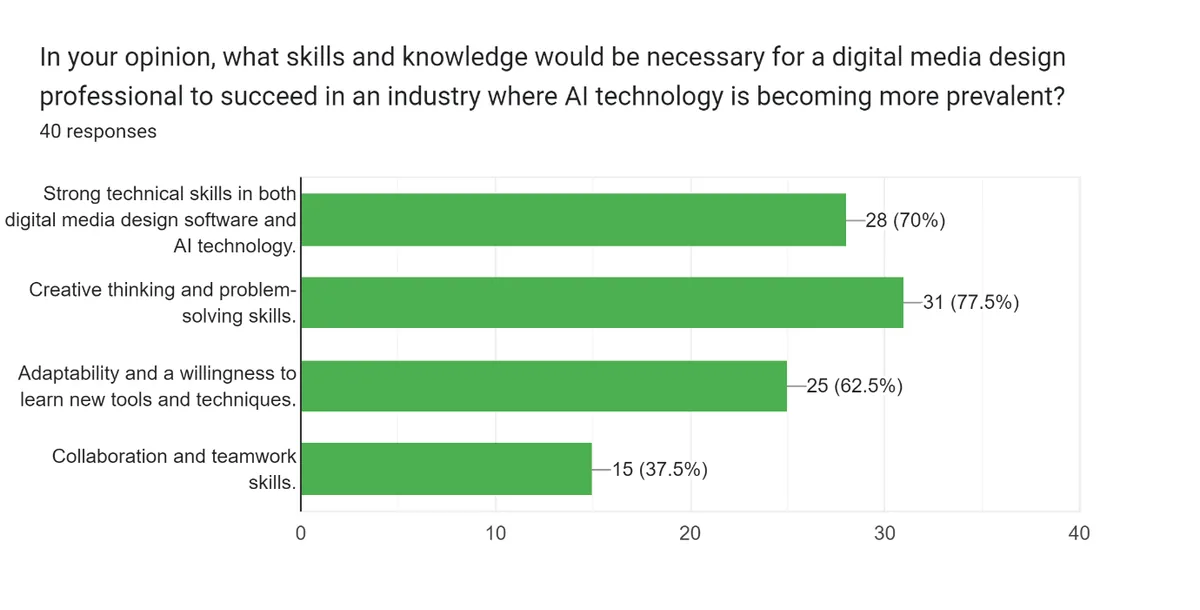
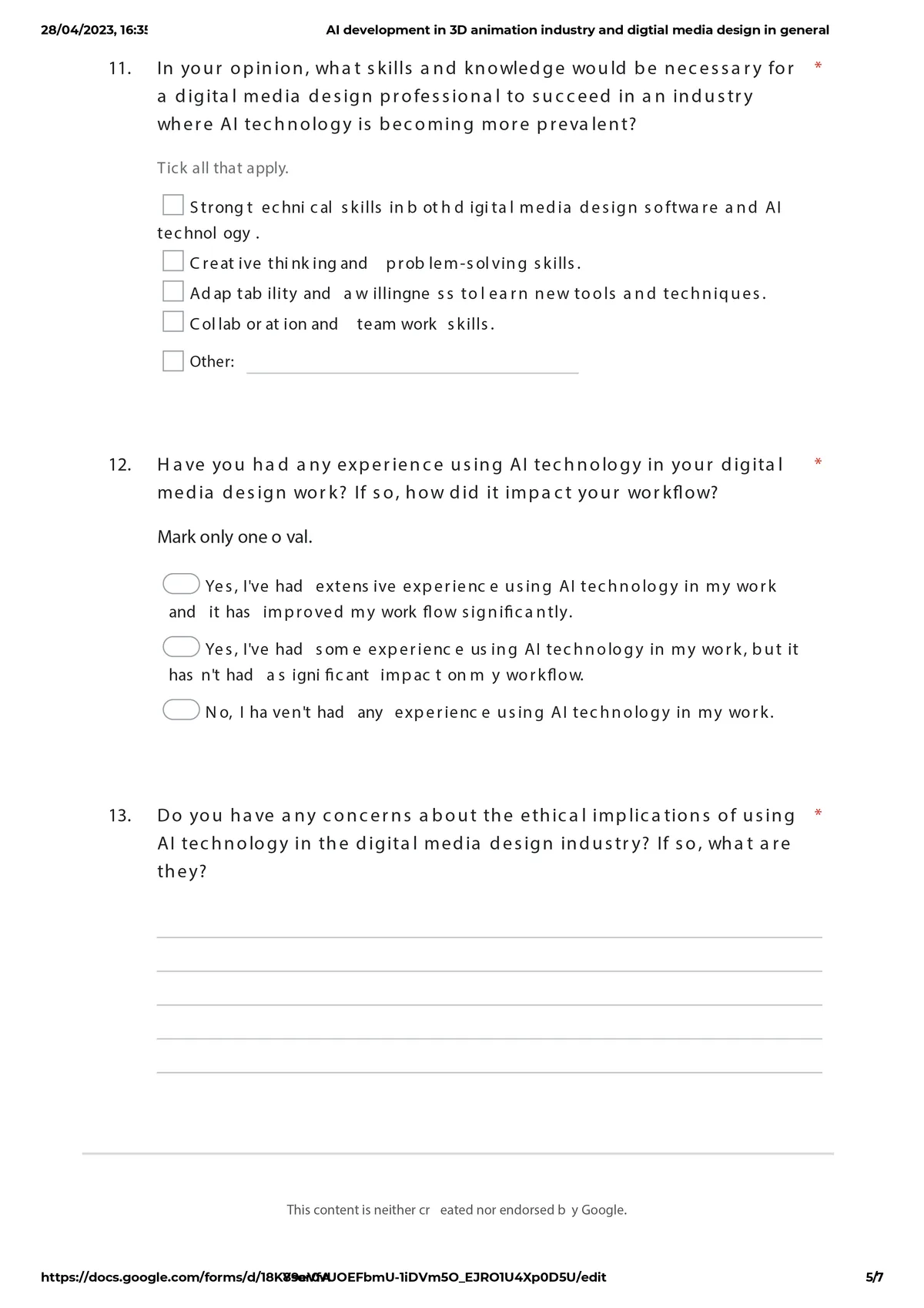
Clearly illustrated by Figure 13, there is a wide spread of responses and popularity of aspects that people think are necessary for a digital media design professional to success in the future with possible, more intense, AI integration. However, 37.5% of responses disesteem the ‘collaboration and teamwork skills’ indicating a significant proportion of the respondents have believe that human interaction with each other will be less needed. It is important to note that while a significant proportion of respondents may have indicated that collaboration and teamwork skills are not necessary for success in the future of digital media design, it does not necessarily mean that these skills will become obsolete. It is possible that respondents may have interpreted the question differently or may have different perspectives on the role of collaboration and teamwork in digital media design with the introduction of AI.
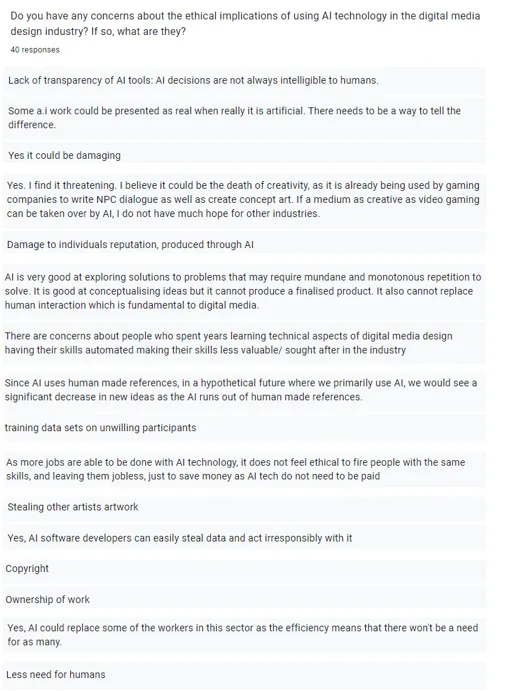
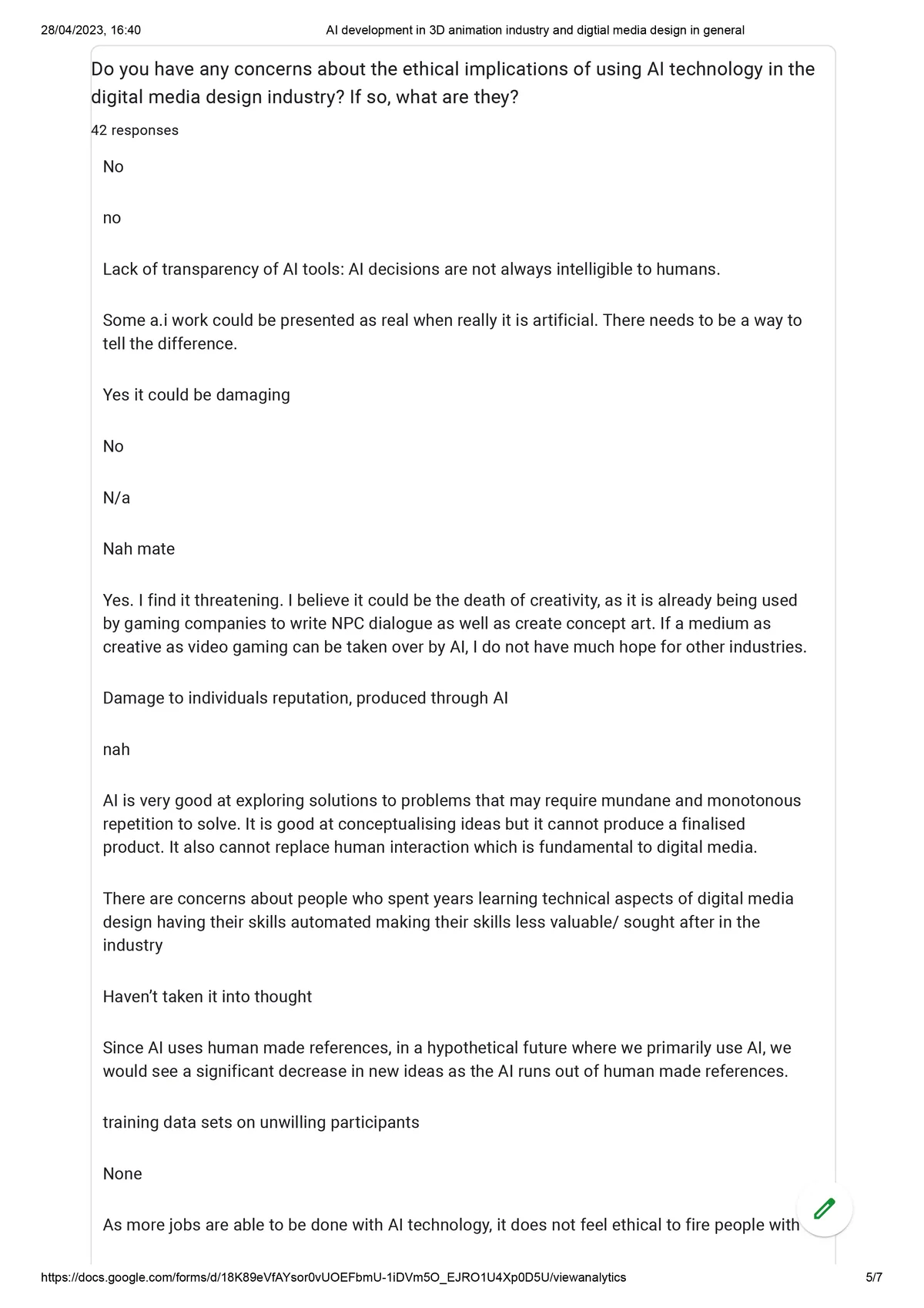
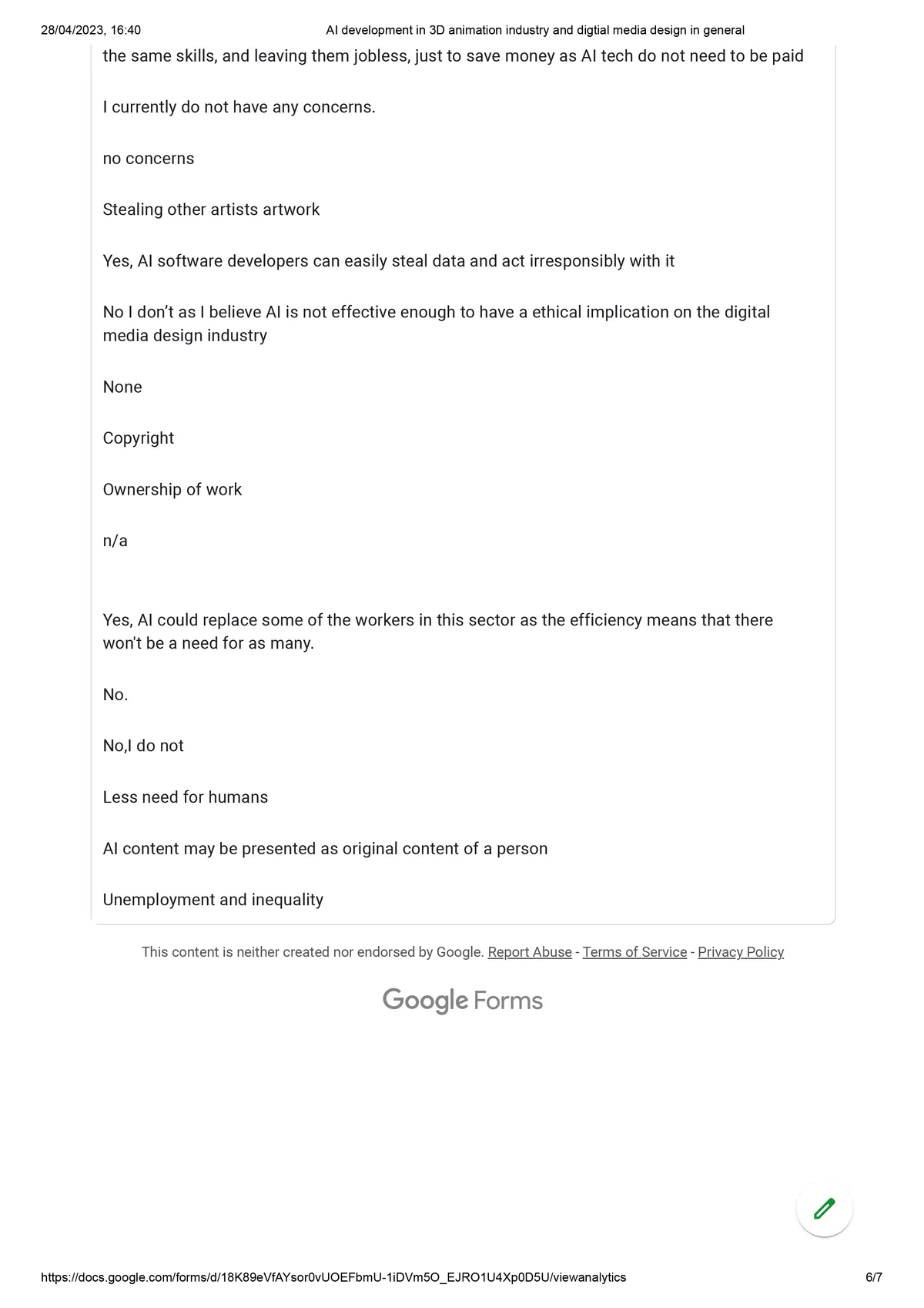
The open-ended nature of the question in Figure 14 stimulated the respondents on their concerns for the ethical implications of using AI technology in the digital media design industry with their previous answers in mind. There was a frequent belief in the AI replacing human work in the way the difference cannot be seen, with valid suggestions of how this could be improved. Figure 14 also shows that another vast concern respondents have is the ownership and copyright of work. Some had a perspective of the bigger picture and expressed valid uncertainty that with it could be the ‘death’ of creativity, as AI is already being used in many daily interactions people experience, such as gaming or digital media in general. Figure 14 revealed that while some respondents had concerns about the potential ethical implications of using AI in the digital media design industry, 60% had no concerns at all. Overall, the results highlight the need for careful consideration of the ethical implications of AI in the industry, while also acknowledging that a significant portion of respondents had no concerns.
Summary
The stable results within the analysis backed up and enhanced the secondary research findings, objectives five and six, as well as validating a part of the thesis question. It is unmistakable that the result of the survey is representative of a reasonable sample of respondents with a potential for further, improved, and expansive research. Additionally, this reinforces the reliability and credibility of specific findings that demonstrate a clear pattern and overall thought between the sample of data.
However, the findings in Figure 5 indicate that there is space for growth and development in the adoption of AI technology in the digital media design industry, as well as there is some level of experimentation and exploration taking place. Further research could be conducted to explore the reasons behind the low adoption rate and how it can be increased in the future. While the current primary research data indicates that AI is having a positive impact on the digital media design industry, it is important to consider the potential risks and disadvantages related with this technology, as presented by the secondary research. Whilst AI continues to progress, it will be important to monitor its impact on the industry and ensure that it is being used in a responsible and ethical manner. Since the findings from Figure 8 suggest that the impact of AI on employment in the creative industries, according to respondents, may not have been as dramatic as initially anticipated and estimated in research report, there have still been some changes in the job market that are worth monitoring and considering. Additionally, it is important to consider the potential limitations of the survey and its sample size. The survey is not representative of the entire population of digital media design professionals and focuses more on people outside of the industry and may be subject to bias or confounding factors.
The practice of choosing ethical ways of using the AI technology in the future guarantees sustainability and increased healthy capability of people and use of their skills in creative and other industries. In one hand, AI and related technologies can positively increase the sustainable capabilities and productivity of the creative design processes as indicated earlier on in the dissertation and backed up now after the analysis of primary data. However, customers or consumers have a substantial influence on the use of AI and its sustainability evaluation. Despite progressive development of AI technologies, there is a high number of customers that choose, and desire human made art and design over AI generated results. Besides customers and consumers, designers and artists themselves “are turning not just to the courts but also to technology to defend themselves against generative AI” (Farrant, 2023 [online]) Euronews article describes. This indicates the three variables, specifically productivity, cost, and sustainability, that impact the 3D animation industry and labour market in general. A number of viewpoints also presented unexpected perceptions. The use of AI in 3D animation, and creative industries in general, has revolutionised the way animation is created. With the collective power of AI other related machine learning technologies, there has been increased awareness of sustainable and more productive animation practices. AI technology has enabled designers to be more efficient. However, there are still stakeholders who lack awareness of the potential benefits of incorporating AI technology into their animation practices. Without this expertise, their ecological and commercial successes may be limited.
DISCUSSION
Introduction
The results of the primary and secondary research evidence shared coherent arguments – introduction to AI technology and its impact on labour market, overall understanding and recognition of the technology, sustainability, and ethical issues of the use of technology in creative industries, current market trends, education and awareness, and accessibility. These findings equally supported and criticized the thesis question, to what extent can AI technology development improve or deteriorate the experience of the future and current professionals in the 3D animation industry?
To determine the impact of AI technology on the 3D animation industry, arguments such as the current technology trends and features available for professionals at this moment of time and the psychological uplifting or distressing theories with the historical references to other examples of how automation affected jobs through the ages will be discussed against the analysed outcomes of the data collection part. This section will also refer to any key attributes or impacts to the potential for sustainable industry practices and environmentally responsible use of AI in 3D animation production in relation to the aims and objectives of this study.
Content
AI has been widely examined more and more since the founding of the subject in 1956 (Artificial Intelligence, 2014 [online]). For over 30 years it has gained continuously more positive attention, to the point where there is roughly 2-3 times more optimistic than pessimistic coverage in media over the time period. However specific concerns including a fear of loss of control and ethical concerns has become a lot more common in recent years. Such concerns could be a reason that less experienced participants may be hesitant to point out the "better" changes and aspects that influence 3D animation by AI. Figures 7 and 10 illustrate the measurable possible technological, productivity and sustainability benefits of AI in the 3D animation industry. The use of human resources such as time and creativity are key in 3D animation production or any other creative industry.
For example, illustration and other digital media practices, expected to improve with AI and algorithmic design, are already utilising AI technologies as the solutions in sustainable, productive, and economically affordable commercial branding and logo design (Artlebedev.com, 2023 [online]). In Figure 9, respondents have supported the statement and classify such introduction of machine learning in high demand commercial design processes as the threat to people in this profession. This indicated strategy renovated Russian design studio – Art Lebedev and increased projects efficiency, saved valuable funds, made economical profit and accelerated the sustainability of the entire design processes. It has also opened new opportunities and allowed company to occupy new market, being one of the first commercial design studios to introduce an AI bot to the public audience and automate their inquiries in just a few minutes. However, such technological and human resource practices is a clear example of disadvantages and anxiety that this whole subject causes.
The whole process of introducing machine learning technologies into services and physical products is knows us automation and dematerialisation. Dematerialisation can be seen as the opportunity to transform physical product into a service (Nobre, G., 2020 [online]). Examples of such dematerialisations are transforming books into eBooks, physical bank branches into mobile apps and physical CDs and vinyl music to digital MP3 format. Therefore, despite any eventual difficulties to dematerialise or automate the creative industries, although the accessibility of technical opportunities and features already available, the reality is that some technological improvements, especially artificial intelligence, and machine learning, have bringing more reasons to alarm than to relief, as the research reveals. Take, for example, the case of AI able to produce art and design in an autonomous and independent way. Figures 14 illustrates respondents’ unique given reasons for such alarm, dematerialisation and automation machines and algorithms living in and working from the clouds, are already causing a new potential competition to those creative industries that have only started their migration to internet. Most importantly, they are causing stress and anxiety to fresh graduates and junior professionals, who have spent several years learning their profession and are now being devalued by the development of such technology.
In the other hand, the same technology has been also set to the service of civilisation, since the artificial intelligence is one of the tools been used for medical and science purposes such as the search for a vaccine or to monitor and predict the spread of the virus, as well as managing the resources: material, personnel, medicines, and premises in a state of extreme demand for health care, such as an infamous COVID-19 pandemic (News-Medical, 2022 [online]). According to the (News-Medical, 2022 [online]), the “AI has been involved in pathological processing, genomic analysis, patient hospitalisation, healthcare, drug development, and corresponding health/medical systems and applications. AI techniques have contributed substantially to the diagnosis, treatment, and understanding of the disease and the virus.” Artificially intelligent machines that perform such effective social issues, may pose a real risk to human employment but improve productivity and human awareness and science development in other sectors. However, creative industries professionals have strong reasons to rethink their profession. Among such expected strengthening in general automation, technology is going to become a highly sensitive subject within the creative sector, since it works both as helper and competitor.
History
“Anxiety over job losses caused by the increased use of machinery has been around for hundreds of years. With each new development, someone has faced the prospect of their livelihood or quality of life being changed irrevocably” (Fleming, 2020 [online]). In the sixteenth century, all work was manual. Up until a priest by the name of William Lee came up with the notion to mechanise, at least partially, the making of stockings. In order to create a long sheet of stocking material that could be cut and seamed into stockings, he modified looms that were used to weave carpets. Compared to the conventional approach, it was much faster and less expensive (Fleming, 2020 [online]). Later, English textile workers experienced more significant shifts. As the Industrial Revolution gained momentum, residents of rural areas moved into the brand-new, rapidly expanding metropolis. There, where steam-powered machines were driving an extraordinary increase in output of goods traditionally made by hand by artisan labour, they found work in mills and factories. Mechanisation presented a challenge for farmworkers as well. The need for more food as a result of expanding populations prompted the use of machinery for everything from planting seeds to harvesting crops. The employment of robots in the production of vehicles increased throughout the 20th century. They were initially employed to carry out straightforward, repetitive activities, which helped boost output, standardise manufacturing quality, and keep prices in check. The Fiat automobile business aired a TV commercial in 1979 with the tagline "hand built by robots" that featured footage of the Strada hatchback's manufacturing process (Fleming, 2020 [online]). Another famous example of automation and job-roles-removing technology in the 20th century is elevators. This example can be used as an analogy to this dissertation’s thesis question and matter. The first elevators were manually operated, requiring a person to control their movement between floors. When the automation technology began to develop, elevators started to become automated. This eliminated the need for an operator to manually open and close doors, further reducing the labour required to operate the elevator (Prisco, 2019 [online]). However, results gathered in Figure 12 illustrate that most of the respondents do not believe in the reputation of history in the case of AI replacing jobs in creative industries.
Recommendations
This investigation could be a point of orientation and inspiration for individuals on a similar career path in the digital media industry as well as for potential future students and recent graduates. The literature review demonstrates a simplified and summarised description of the different parts within the thesis matter of AI implementation in 3D animation and general creative industry. Additionally, the individual correlation of machine learning technologies development, sustainability and creative industries, could have reasonable applications and implications in the future. Likewise, viewpoints in the primary research findings could encourage further investigation, once the predicted innovation within these fields comes into execution and help in the progression and ethical execution of AI in the 3D animation design. Overall, sustainable and ethical use of AI in 3D animation and other creative practices can influence and be used as solution for the increased demand of graphical content and improvement on cost and production time. However, there are barriers in the AI technology and artists’ apprehension that currently prevent the acceleration of further integration of technology.
In connection with the current recommendations for creative individuals in the 3D animation industry. There are a number of trends and opportunities every designer and artist should be aware of. The easiest example and practice to recommend to everyone is staying updated with the news on this technology. “Artificial intelligence (AI) generative tools such as text-to-video and text-to-3D are about to crash headfirst into the creative industries. While many are sceptical that these will overtake the likes of Disney or Pixar anytime soon, there are already examples of AI tools enabling independent creatives to produce astoundingly high-quality animations at a fraction of the time and cost of blockbuster studios” (Schwanke, 2023 [online]).
Technology such as “Audio-to-Animation” made easy with generative AI. Omniverse™ Audio2Face beta application makes it possible to animate a 3D character to match any voice-over track, whether it is characters animation for a game, film or real-time digital assistants (NVIDIA, 2023 [online]). Another example of AI technology feature for 3D animation to be aware of is - “Plask”. It is a tool that allows users to create character images by setting up poses and camera angles with the help of AI technology. Users can create poses easily using this feature (Plask Documentation, 2019 [online]).
Limitations to study
Notwithstanding the contrasting visions and discussion throughout this study, the niche nature and innovation of the subject did result in some limitations. There was limited academic information on implementation of AI technology in 3D animation design specifically. This limitation had an impact on the specificity of some aspects throughout the dissertation, and although still relevant, primarily referenced the impact AI on the general creative industry. Henceforward, dedicated subject matter should be simplified for a more efficient secondary and primary data collection. The scarcity of results for the targeted survey and primary research overall, despite success in the secondary research, also limited the extent and relevance of the results analysis. This factor has hypothetically disadvantaged the discovery of evidence in relation to the success of AI utilisation in 3D animation industry practices at the moment of investigation, a knowledge gap exposed in the literature review.
Sustainability Development Goals
With regards to sustainability development goals (SDGs), The use of AI in 3D animation production has the potential to not only transform the way that animators and studios create content, but also to contribute to the achievement of sustainability development goals. By automating certain tasks and allowing for more efficient workflow, AI can save time and resources, reducing the environmental impact of the production process. In addition, AI-powered tools and techniques can be used to create more realistic and accurate depictions of nature and the environment, helping to raise awareness, and understanding of sustainability issues.
CONCLUSION
This dissertation has carefully investigated development and implementation of artificial intelligence within the 3D animation and creative industry in general. The comparison of hypothesis and first-hand data has provided a brief overview of the industry, and therefore, a valuable foundation of knowledge and preparation for future employment. The thesis study, in proportion to the set of questions, aims and objectives, has acknowledged that the technology of artificial intelligence in 3D animation, and creative industry in general, can improve the design processes, production, and execution of creative tasks. It has a potential to be used in harmony with creative professionals, artists, and designers. AI has a possibility of making creative individuals’ job easier and more interesting if used reasonably, giving more space for creativity, and reducing time that needs to be spent on mind-numbing tasks. Other digital media practices across multiple disciplines can benefit from AI integrated innovation too, it can improve the efficiency, sustainability, and environmental merit of the creative tasks processes. However, as mentioned before, a wider examination of the industry and AI’s effect on it is necessary to facilitate success at all stages. The responsibility for this needs to be allocated to all stakeholders involved within the development of such AI technologies with cooperation from creative professionals. To stabilise the situation, accelerate the necessary changes, and most importantly, reduce the anxiety around the matter, questions and study gap identified in this study need to be considered simultaneously with the following, extracted from the dissertation, main factors. The fear of AI and automation replacing human workers in creative industries, leading to job losses and unemployment. Concerns that AI algorithms may perpetuate and develop biases and discrimination, leading to unfair and unethical outcomes. The legal and ethical issues surrounding the ownership and use of AI-generated creative works, such as music, art, and literature. The challenge of understanding how AI systems make decisions, and the difficulty of holding them accountable when something goes wrong. The challenge of integrating AI with human creativity, and the potential for AI to replace or augment human creative abilities.
References
- aEYE. (2022). aEYE: AI Art in New Zealand - aEYE. [online] Available at: https://aeye.co.nz/ [Accessed 19 Dec. 2022].
- Agrawal, Ajay, et al. “Artificial Intelligence: The Ambiguous Labor Market Impact of Automating Prediction.” The Journal of Economic Perspectives, vol. 33, no. 2, 2019, pp. 31–50. JSTOR, https://www.jstor.org/stable/26621238. Accessed 10 Nov. 2022.
- Anantrasirichai, N., Bull, D. Artificial intelligence in the creative industries: a review. Artif Intell Rev 55, 589–656 (2022). https://doi.org/10.1007/s10462-021-10039-7. [Accessed 19 Dec. 2022]
- Arinez, J.F., Chang, Q., Gao, R.X., Xu, C. and Zhang, J. (2020). Artificial Intelligence in Advanced Manufacturing: Current Status and Future Outlook. Journal of Manufacturing Science and Engineering, [online] 142(11). doi:10.1115/1.4047855 [Accessed 19 Dec. 2022].
- Artificial Intelligence. (2014). History of Artificial Intelligence - Artificial Intelligence - www.coe.int. [online] Available at: https://www.coe.int/en/web/artificial-intelligence/history-of-ai#:~:text=The%20summer%201956%20conference%20at,the%20founder%20of%20the%20discipline. [Accessed 12 Apr. 2023].
- Artlebedev.com. (2023). Nikolay Ironov — designer and neural network. [online] Available at: https://ironov.artlebedev.com/ [Accessed 14 Apr. 2023].
- Blender.org. (2022). Denoise Node — Blender Manual. [online] Available at: https://docs.blender.org/manual/en/latest/compositing/types/filter/denoise.html [Accessed 19 Dec. 2022].
- DeepMotion (2020). MOTION TECHNOLOGY STARTUP DEEPMOTION MAKES MOTION CAPTURE ACCESSIBLE TO EVERYONE WITH LAUNCH OF ANIMATE 3D. [online] DeepMotion. Available at: https://blog.deepmotion.com/2020/10/29/motion-technology-startup-deepmotion-makes-motion-capture-accessible-to-everyone-with-launch-of-animate-3d/ [Accessed 19 Dec. 2022].
- Devagiri, J.S., Paheding, S., Niyaz, Q., Yang, X. and Smith, S. (2022). Augmented Reality and Artificial Intelligence in industry: Trends, tools, and future challenges. Expert Systems with Applications, [online] 207, p.118002. doi:10.1016/j.eswa.2022.118002. [Accessed 14 Dec. 2022].
- Donnelly, J. (2022). 6 AI Tools For Filmmaking You Need To Know About - MASV. [online] MASV. Available at: https://massive.io/filmmaking/6-ai-tools-for-filmmaking/#:~:text=AI%20is%20already%20a%20staple,%2C%20coloring%2C%20and%20music%20creation. [Accessed 19 Dec. 2022].
- Farrant, T. (2023). Here’s how artists are fighting back against AI image generation. [online] euronews. Available at: https://www.euronews.com/culture/2023/03/27/from-lawsuits-to-tech-hacks-heres-how-artists-are-fighting-back-against-ai-image-generatio [Accessed 11 Apr. 2023].
- Fleming, S. (2020). How automation has affected jobs through the ages. [online] World Economic Forum. Available at: https://www.weforum.org/agenda/2020/09/short-history-jobs-automation [Accessed 14 Apr. 2023].
- Gantt.io (2022). Gantt.io. [online] Gantt.io. Available at: https://www.gantt.io/ [Accessed 20 Dec. 2022].
- Google.com. (2020). Google Sheets. [online] Available at: https://docs.google.com/spreadsheets/u/0/ [Accessed 28 Mar. 2023].
- Harvard Business Review. (2019). Taking a Systems Approach to Adopting AI. [online] Available at: https://hbr.org/2019/05/taking-a-systems-approach-to-adopting-ai [Accessed 14 Dec. 2022].
- Holzapfel, A., Jääskeläinen, P. and Kaila, A.-K. (2022). Environmental and Social Sustainability of Creative-Ai. arXiv.org. [online] doi:10.48550/arXiv.2209.12879 [Accessed 19 Dec. 2022].
- https://www.facebook.com/mattwoodwarduk (2022). Artificial Intelligence Statistics For 2022. [online] Matthew Woodward. Available at: https://www.matthewwoodward.co.uk/work/artificial-intelligence-statistics/ [Accessed 14 Dec. 2022].
- Investopedia. (2022). Artificial Intelligence: What It Is and How It Is Used. [online] Available at: https://www.investopedia.com/terms/a/artificial-intelligence-ai.asp#:~:text=Artificial%20intelligence%20(AI)%20refers%20to,as%20learning%20and%20problem%2Dsolving. [Accessed 14 Dec. 2022].
- Jstor.org. (2019). Artificial Intelligence The Ambiguous Labor Market Impact of Automating Prediction on JSTOR. [online] Available at: https://www.jstor.org/stable/26621238#metadata_info_tab_contents [Accessed 14 Dec. 2022]
- Lane, M. and A. Saint-Martin (2021), "The impact of Artificial Intelligence on the labour market: What do we know so far?", OECD Social, Employment and Migration Working Papers, No. 256, OECD Publishing, Paris, https://doi.org/10.1787/7c895724-en. [Accessed 14 Dec. 2022].
- MyBib Contributors (2022). MyBib Citation Manager. [online] MyBib. Available at: https://www.mybib.com/ [Accessed 20 Dec. 2022].
- News-Medical (2022). How is artificial intelligence used in COVID-19 research? [online] News-Medical.net. Available at: https://www.news-medical.net/news/20220812/How-is-artificial-intelligence-used-in-COVID-19-research.aspx#:~:text=Contributions%20of%20AI%20to%20COVID,applications%20for%20containing%20the%20virus [Accessed 14 Apr. 2023].
- Nobre, G., 2020. Creative Economy and Covid-19, Technology, Automation and the New Economy. Pobrane z: http://www.researchgate.net/profile/Guilherme_Nobre/publication/340438912_Creative_Economy_and_Covid19_technology_automation_and_the_new_economy/links/5e8a71f4299bf130797ffc1e/Creative-Economy-and-Covid-19-technology-automation-and-the-new-economy.Pdf (2020.08. 01) [Accessed 14 Apr. 2023].
- NVIDIA. (2023). Omniverse Audio2Face App. [online] Available at: https://www.nvidia.com/en-us/omniverse/apps/audio2face/ [Accessed 25 Apr. 2023].
- Pannu, A., 2015. Artificial intelligence and its application in different areas. Artificial Intelligence, 4(10), pp.79-84. [online] Available at: https://www.academia.edu/download/47569713/IJEIT1412201504_15.pdf [Accessed 19 Dec. 2022].
- Plask Documentation. (2019). Plask Documentation. [online] Available at: https://docs.plask.ai/ [Accessed 25 Apr. 2023].
- Prisco, J. (2019). A short history of the elevator. [online] CNN. Available at: https://edition.cnn.com/style/article/short-history-of-the-elevator/index.html [Accessed 14 Apr. 2023].
- Romano, N. (2020). The pandemic animation boom: How cartoons became king in the time of COVID. [online] EW.com. Available at: https://ew.com/movies/animation-boom-coronavirus-pandemic/ [Accessed 19 Dec. 2022].
- Schwanke, A. (2023). Move over, Disney. AI is giving YouTubers the tools to make your next animation obsession. [online] TechRadar. Available at: https://www.techradar.com/features/move-over-disney-ai-is-giving-youtubers-the-tools-to-make-your-next-animation-obsession [Accessed 25 Apr. 2023].
- Sloan, M. (2021). Machine learning, explained | MIT Sloan. [online] Mit.edu. Available at: https://mitsloan.mit.edu/ideas-made-to-matter/machine-learning-explained#:~:text=What%20is%20machine%20learning%3F,to%20how%20humans%20solve%20problems. [Accessed 14 Dec. 2022].
- Strickland, E. (2022). DALL-E 2’s Failures Are the Most Interesting Thing About It. [online] IEEE Spectrum. Available at: https://spectrum.ieee.org/openai-dall-e-2 [Accessed 15 Dec. 2022].
- The (2014). Delve. [online] Delve. Available at: https://delvetool.com/groundedtheory [Accessed 1 Apr. 2023].
- The Week Staff (2022). Generative AI and the future of creative work. [online] The Week UK. Available at: https://www.theweek.co.uk/news/technology/958787/chat-gpt-generative-ai-and-the-future-of-creative-work [Accessed 15 Dec. 2022].
- Waltersmann, L., Kiemel, S., Stuhlsatz, J., Sauer, A. and Miehe, R. (2021). Artificial Intelligence Applications for Increasing Resource Efficiency in Manufacturing Companies—A Comprehensive Review. Sustainability, [online] 13(12), p.6689. doi:10.3390/su13126689. [Accessed 14 Dec. 2022].
- Yassine Tahi (2022). Kinetix: Building AI-powered 3D No-Code Animation Platform. [online] 80.lv. Available at: https://80.lv/articles/kinetix-building-ai-powered-3d-no-code-animation-platform/ [Accessed 19 Dec. 2022].
- You Lv, "Application of 3D Animation Cluster System Based on Artificial Intelligence and Machine Learning", Computational Intelligence and Neuroscience. [online] Available at: https://doi.org/10.1155/2022/2904607 [Accessed 15 Dec. 2022]
Bibliography
- Berkeley.edu. (2022). Artificial Intelligence: A Modern Approach, 4th US ed. [online] Available at: http://aima.cs.berkeley.edu/ [Accessed 26 Apr. 2023].
- Deeplearningbook.org. (2016). Deep Learning. [online] Available at: https://www.deeplearningbook.org/ [Accessed 26 Apr. 2023].
- Faber. (2023). Animator’s Survival Kit. [online] Available at: https://www.faber.co.uk/product/9780571238347-the-animators-survival-kit/ [Accessed 26 Apr. 2023].
- Kerlow, I.V. (2009). The Art of 3D Computer Animation and Effects. [online] John Wiley & Sons. Available at: https://www.wiley.com/en-us/The+Art+of+3D+Computer+Animation+and+Effects%2C+4th+Edition-p-9780470084908 [Accessed 26 Apr. 2023].
- Manning Publications. (2017). Deep Learning with Python. [online] Available at: https://www.manning.com/books/deep-learning-with-python [Accessed 26 Apr. 2023].
- Marcus, G. (2018). Deep Learning: A Critical Appraisal. [online] arXiv.org. Available at: https://arxiv.org/abs/1801.00631 [Accessed 26 Apr. 2023].
- O’Hailey, T. (2012). Hybrid Animation. [online] Taylor & Francis. Available at: https://www.routledge.com/Hybrid-Animation-Integrating-2D-and-3D-Assets/OHailey/p/book/9780240812052 [Accessed 26 Apr. 2023].
APPENDICES
Appendix A – Time management gantt chart for semester 1
Appendix B – Time management gantt chart for semester 2
Appendix C – Google Forms survey questions
Appendix D – Google Forms survey responses